Advantage India
Robust
Demand
*As of FY25, the total length of National Highways in the country was 146,572 km.
*The continued expansion of India's road infrastructure supported robust vehicle demand during FY26, with domestic automobile sales reaching 28.27 million units.
*Two-wheelers accounted for 21.71 million units, followed by passenger vehicles (4.64 million units), commercial vehicles (1.08 million units) and three-wheelers (0.84 million units) reflecting sustained demand for road-based mobility and freight transportation.

Attractive
Opportunities
*India has joined the league of 15 of global alliance which will work towards the ethical use of smart city technologies.
*Road building in India is the second least expensive in Asia.
*Private investment in India's highway sector is expected to approach Rs. 1 lakh crore (US$ 10.60 billion) in FY27, driven by the revival of the Build-Operate-Transfer (BOT) model and increased participation from private developers. The Government is prioritising Public-Private Partnership (PPP) projects and asset monetisation to mobilise long-term capital and accelerate highway infrastructure development.
*In May 2026, the Ministry of Road Transport and Highways (MoRTH) revised the bidding framework for Build-Operate-Transfer (BOT) highway projects, allowing institutional investors to bid directly and boosting private investment in National Highway development.

Higher
Investments
*During the year FY26, NHAI monetised highway assets worth Rs. 28,077.90 crore (US$ 3.18 billion) through the Toll-Operate-Transfer (ToT) and Infrastructure Investment Trust (InvIT) models, with ToT contributing Rs. 12,357 crore (US$ 1.40 billion) and public and private InvITs together contributing Rs. 15,720.90 crore (US$ 1.78 billion), supporting sustained investment in National Highway infrastructure
*The government is developing 35 multimodal logistics parks as part of Bharatmala Pariyojana with an investment of about Rs. 46,000 crore (US$ 5.21 billion) to handle around 700 million metric tonnes of cargo.
*In September 2025, the government announced a massive Rs. 11 lakh crore (US$ 125 billion) initiative to build 17,000 km of high-speed, access-controlled expressways by 2033. This plan aims to expand India’s high-speed road network fivefold, boost logistics efficiency, and enhance economic connectivity. About 40% of these expressways are already under construction, with most expected to be completed by 2030.

Policy
Support
*In March 2026, MoRTH introduced stricter contractor evaluation norms, linking catastrophic failures in National Highway projects with contractor ratings and future contract eligibility to enhance construction quality
*The Government strengthens the National Highways network through flagship programmes such as Bharatmala Pariyojana (including the subsumed NHDP), SARDP-NE, LWE Road Development Programme (including the Vijayawada–Ranchi Road), and Externally Aided Projects (EAP).
*100% Foreign Direct Investment (FDI) is allowed under the automatic route in the road and highways sector, subject to applicable laws and regulation.

Introduction
India now boasts the world’s largest road network at over 6.37 million km (as of March 2026), carrying more than 70% of freight and 85% of passenger traffic. Road transportation has gradually increased over the years with improvement in connectivity between cities, towns and villages in the country.
In India, sale of automobiles and movement of freight by roads is growing at a rapid rate.

Market size
National Highway construction in India increased at a CAGR of 4.5% between FY16 and FY26. Construction reached 12,349 km in FY24 before moderating to 10,660 km in FY25 and 9,380 km in FY26. Despite the moderation, the pace of National Highway development remained robust, supported by continued investments in road infrastructure. Under the Union Budget 2026–27, the Government of India allocated Rs. 3,09,875 crore (US$ 32.83 billion) to the Ministry of Road Transport and Highways, marking an 8% increase over the revised estimate of Rs. 2,87,142 crore (US$ 30.43 billion) in FY 2025–26. National Highways Authority of India is set to receive Rs. 1,87,293 crore (US$ 20.8 billion), followed by roads and bridges at Rs. 1,21,999 crore (US$ 13.6 billion) and road transport and safety at Rs. 400 crore (US$ 0.04 billion).
In line with the Government's continued focus on infrastructure development, the Ministry of Road Transport and Highways has identified a Public-Private Partnership (PPP) pipeline of 13,400 km of National Highway projects, with an estimated investment of Rs. 8.3 lakh crore (US$ 87.94 billion), to be developed over the next three years

The National Highways Authority of India (NHAI) has surpassed its FY26 construction target by 15%, completing 5,313 km of national highways against its annual target of 4,640 km. The over achievement reflects execution capability in India’s roads and highways ecosystem, even though it is slightly less than the 5,614 km constructed in FY25. The performance was supported by robust capital deployment and faster project execution capability in expressways, economic corridors, and stretches of national highways. The momentum remains crucial for India’s logistics cost optimisation, connectivity enhancement, and infrastructure-driven economic growth, especially in the backdrop of multi-modal integrations like PM Gati Shakti and Bharatmala.
The continued expansion of India's road infrastructure supported robust vehicle demand during FY26, with domestic automobile sales reaching 28.27 million units. Two-wheelers accounted for 21.71 million units, followed by passenger vehicles (4.64 million units), commercial vehicles (1.08 million units) and three-wheelers (0.84 million units), reflecting sustained demand for road-based mobility and freight transportation.
India's National Highway network expanded significantly from 91,287 km in 2014 to 1,46,572 km in December 2025, registering an increase of over 60%. The growth has been driven by substantial expansion in 2L/2L+PS roads, which increased from 45,399 km to 85,004 km during the period. Higher-capacity corridors also witnessed rapid development, with 4-lane and above highways expanding from 18,278 km in 2014 to 45,516 km in 2025. In addition, High-Speed Corridors (HSCs) grew from 93 km to 3,052 km, reflecting the government's focus on developing access-controlled expressways. The shift towards wider carriageways highlights India's continued investment in improving highway capacity, connectivity and logistics efficiency.
In May 2026, PNC Infratech secured two National Highway projects from NHAI in Uttar Pradesh worth Rs. 3,483 crore (US$ 369.03 million). The projects comprise the four-laning of the Fatehpur–Kandhai section of NH-330A and the widening of the Varanasi–Prayagraj section of NH-19, strengthening the company's roads and highways order book
FDI inflows in construction development stood at Rs. 1,39,474 crore (US$ 27.53 billion) between April 2000-March 2026. As of February 2026, India has 1,823 total road projects, out of which 826 are under the Public-Private Partnership (PPP) model.
Key Investments/Developments
NHAI has monetised highway assets worth Rs. 1,70,638.40 crore (US$ 21.87 billion) between FY2018–19 and FY2025–26 through the Toll-Operate-Transfer (ToT), Infrastructure Investment Trust (InvIT) and securitisation models. Asset monetisation increased from Rs. 9,681.50 crore (US$ 1.39 billion) in FY2018–19 to a peak of Rs. 41,079.00 crore (US$ 4.96 billion) in FY2023–24, before moderating to Rs. 28,077.90 crore (US$ 3.18 billion) in FY2025–26. Between FY19 to FY26, the ToT model contributed the largest share with Rs. 61,351.70 crore (US$ 7.86 billion), followed by securitisation at Rs. 50,125.00 crore (US$ 6.42 billion), private InvITs at Rs. 49,661.70 crore (US$ 6.36 billion) and public InvITs at Rs. 9,500.00 crore (US$ 1.22 billion). The diversified monetisation strategy has enabled NHAI to unlock value from operational highway assets and reinvest the proceeds into the development of new road infrastructure.
In May 2026, Union Minister Shri Nitin Gadkari approved the development of the four-lane Thiruvarur Bypass and additional Road Over Bridges (ROBs) in Tamil Nadu at an investment of Rs. 1,427.61 crore (US$ 151.26 million). The projects are expected to improve traffic flow, reduce congestion and strengthen regional connectivity in the state.
In May 2026, the Government announced that work on six major road infrastructure projects across Delhi-NCR will commence between October 2026 and April 2027. The projects are aimed at improving regional connectivity, easing traffic congestion and strengthening links with key expressways.
Private investment in India's highway sector is expected to approach Rs. 1 lakh crore (US$ 10.60 billion) in FY27, driven by the revival of the Build-Operate-Transfer (BOT) model and increased participation from private developers. The Government is prioritising Public-Private Partnership (PPP) projects and asset monetisation to mobilise long-term capital and accelerate highway infrastructure development.
In April 2026, NHAI awarded the contract for a four-lane expressway connecting Vadhavan Port to NH-48 in Maharashtra. The project is expected to enhance port connectivity, improve freight movement and strengthen multimodal logistics infrastructure in western India.
In March 2026, NHAI awarded an Rs. 1,734 crore (US$ 196.22 million) contract for the four-laning of the Gudebellur–Mahabubnagar section of NH-167 in Telangana under the Hybrid Annuity Model (HAM).
In March 2026, NHAI awarded an Rs. 130.65 crore (US$ 14.79 million) EPC contract for the construction of flyovers and underpasses at the Jaipur Bypass Junction on NH-48 in Rajasthan to improve traffic flow and reduce congestion.
In March 2026, NHAI awarded an Rs. 368.85 crore (US$ 41.74 million) EPC contract for the construction of the 15-km South-East Bypass in Azamgarh, Uttar Pradesh, to improve regional connectivity and reduce congestion.
On February 4, 2026, The Ministry of Road Transport & Highways has proposed the development of the 189.93 km Amaravati Outer Ring Road (ORR) in Andhra Pradesh as a greenfield project to decongest urban areas and improve regional connectivity across the Amaravati capital region, including Vijayawada, Guntur, and Tenali. The ORR will divert through-traffic away from city centers, provide dedicated interchanges for seamless access to Vijayawada Airport, and allow for future rapid transit corridor integration.
Envisioned as a key multimodal logistics corridor, the ORR will integrate with National Waterway-4 and connect major ports such as Machilipatnam and Krishnapatnam with inland urban and industrial hubs. The project is expected to reduce travel time by 30–40 percent, lower fuel consumption, and cut vehicular emissions, supporting efficient freight movement and environmental sustainability.
The Ministry of Road Transport & Highways has proposed the construction of a 62.10 km two-lane road from Rafiabad to Tangdhar in the Union Territory of Jammu & Kashmir to enhance strategic and regional connectivity in border areas. The corridor will link key locations including Kupwara, Chowkibal, Tangdhar, and Teetwal, improve access to villages along the Line of Control (LoC), and strengthen defence logistics by ensuring reliable movement for security forces and essential supplies.
As of January 8, 2025, the Ministry of Road Transport and Highways shared that India’s National Highway network grew 60% in a decade, now standing at 146,195 km. High-speed corridor length jumped from 93 km in 2014 to 2,474 km in 2024. Projects aided by the World Bank, JICA, and ADB added 2,540 km by November 2024.
On November 17, 2025, the National Highways Authority of India (NHAI) invited bids for 52 highway projects in the current financial year, with 18 projects approved and a target to award 4500 km of projects and construct 5,000 km in FY26. This pipeline is expected to help achieve national highway construction targets.
In 2026–27, an allocation of Rs. 1,21,999 crore (US$ 13.6 billion) has been made towards roads and bridges under the Ministry of Road Transport and Highways, marking a 5% increase over the revised estimate for 2025–26. The expenditure covers key areas such as the development of national highways, expressway projects, lane expansion under various programmes, and enhancing road connectivity in left-wing extremism-affected regions, reflecting the government’s continued focus on strengthening transport infrastructure.
On November 21, 2025, the Ministry of Road Transport and Highways (MoRTH) allocated Rs. 255 crore (US$ 28.6 million) for road development in Assam and Arunachal Pradesh under SARDP-NE for FY26. Rs. 80 crore (US$ 8.97 million) was allocated to Guwahati (Assam) and Rs. 175 crore (US$ 19.6 million) to Itanagar (Arunachal Pradesh) regional offices to improve road infrastructure.
NHAI released a comprehensive Asset Monetisation Strategy aimed at attracting private investments and improving operational efficiencies in highway infrastructure. Models like Toll-Operate-Transfer (ToT), InvITs, and project securitisation have raised over Rs. 1.4 lakh crore (US$ 15.85 billion), marking a transformative step for private sector engagement and funding sustainability.
National Highways Infra Trust (NHIT) raised Rs. 16,000 crore (US$ 1.92 billion) in InvIT round- 3, stretches aggregate length of 889 kilometres of national highways, marking the largest transaction by the National Highways Authority of India (NHAI).
On January 17, 2026, Narendra Modi inaugurated and laid the foundation stone for multiple rail and road infrastructure projects worth Rs. 3,250 crore (US$ 36.1 million) in Malda. The projects are aimed at strengthening regional connectivity and accelerating economic development across West Bengal and the North-Eastern region.
On August 17, 2025, Prime Minister Mr. Narendra Modi inaugurated Rs. 11,000 crore (US$ 1.25 billion) worth of highway projects in Delhi, including the Delhi section of the Dwarka Expressway. These projects, undertaken with private sector participation, are expected to reduce congestion and enhance urban connectivity.
The Union Minister of State for Road, Transport and Highways has stated that the Government aims to boost corporate investment in roads and shipping sector, along with introducing business-friendly strategies, which will balance profitability with effective project execution.
According to the data released by Department for Promotion of Industry and Internal Trade Policy (DPIIT), FDI inflows in In a significant effort to enhance infrastructure, the Union government approved eight national high-speed corridor projects, involving the construction of 936 kilometres of highways at a total cost of Rs. 50,655 crore (US$ 6.09 billion). Private investments in the highway sector would likely rise from around Rs. 20,000 crore (US$ 2.40 billion) a year now to nearly Rs. 1 trillion (US$ 12 billion) in the next 6-7 years, Mr. Amit Kumar Ghosh, additional secretary, ministry of road transport and highways, said.
Government Initiatives
Some of the recent Government initiatives are as follows:
- In May 2026, the Government announced plans to invest Rs. 34,500 crore (US$ 3.66 billion) in expressways, ring roads, tunnels and elevated corridors to modernise Delhi's transport network and improve regional connectivity
- In May 2026, the Ministry of Road Transport and Highways (MoRTH) proposed awarding National Highway contracts only after obtaining key statutory approvals and making projects construction-ready to reduce execution delays, cost overruns and project risks.
- In May 2026, the Ministry of Road Transport and Highways (MoRTH) revised the bidding framework for Build-Operate-Transfer (BOT) highway projects, allowing institutional investors to bid directly and boosting private investment in National Highway development.
- In April 2026, the Government introduced a temporary cost escalation compensation mechanism for National Highway projects by revising price adjustment norms and enabling monthly payments under EPC and HAM contracts for three months till June 2026. The initiative is expected to improve contractor liquidity and ensure uninterrupted project execution.
- In April 2026, the Ministry of Road Transport and Highways (MoRTH) revised construction timelines for National Highway projects, allowing execution periods of up to six years for complex projects to improve project planning and timely delivery
- In April 2026, the Union Cabinet approved the extension of PMGSY-IV by two years, sanctioned the construction of 161 additional long-span bridges and increased the programme outlay to strengthen rural road connectivity across the country
- In March 2026, the Union Cabinet approved the construction of the 101.5-km four-lane access-controlled Barabanki–Bahraich section of NH-927 in Uttar Pradesh at an investment of Rs. 6,969.04 crore (US$ 788.61 million) under the Hybrid Annuity Model (HAM).
- In March 2026, Indian Highways Management Company Limited (IHMCL), promoted by NHAI, signed an MoU with commercial vehicle aggregator platforms to integrate digital safety alerts, emergency response services and driver feedback mechanisms through the Rajmargyatra App, enhancing road safety and commuter experience on National Highways.
- In March 2026, the Union Cabinet approved the development of the 80.45-km Badnawar–Petlawad–Thandla–Timarwani section of NH-752D in Madhya Pradesh at an investment of Rs. 3,839.42 crore (US$ 434.47 million) under the Hybrid Annuity Model (HAM) to strengthen connectivity with the Delhi–Mumbai Expressway.
- In February 25, 2026, the Ministry of Road Transport and Highways (MoRTH) launched a pilot project deploying Mobile Quality Control Vans (MQCVs) across Rajasthan, Gujarat, Karnataka and Odisha. The initiative marks a shift in approach—from simply building roads faster to ensuring they are built to last. By introducing real-time, on-site quality assessments, MoRTH aims to move from traditional post-construction inspections to proactive monitoring during project execution.
- In February 3, 2026, The Ministry of Road Transport & Highways has proposed the upgradation of the 77.102 km Chitrakoot–Satna corridor from a two-lane road to a four-lane divided carriageway across Madhya Pradesh and Uttar Pradesh. The project will strengthen regional and inter-state connectivity, enhance freight movement, reduce travel time and vehicle operating costs, and improve overall transport efficiency along a corridor linking key economic and urban centers.
- In February 3, 2026, The Ministry of Road Transport & Highways has proposed the construction of a 156.10 km four-lane greenfield highway from Rourkela to Sithiyo, spanning Odisha and Jharkhand. The corridor will traverse five districts and is strategically aligned to connect PM GatiShakti economic nodes, including a seafood cluster and a Special Economic Zone (SEZ), strengthening regional and inter-state connectivity.
- On February 2026, the National Highways Authority of India (NHAI) initiated construction of a Rs. 3,147 crore (US$ 378 million) stretch of NH-43 under the Raipur–Dhanbad economic corridor, aimed at improving connectivity between Chhattisgarh and Jharkhand and boosting coal and industrial logistics.
- Launched in 2013, the Pradhan Mantri Gram Sadak Yojana (PMGSY-II) focused on strengthening and upgrading the existing rural road network. As of mid-January 2026, a total of 6,612 roads covering 49,087 kilometres, along with 749 bridges, had been completed under this phase. Subsequently, PMGSY-III, approved in 2019, aims at consolidating 1.25 lakh kilometres of critical rural routes linking habitations to agricultural markets, educational institutions, and healthcare facilities. Under PMGSY-III, more than 1.02 lakh kilometres of roads and 1,734 bridges have been completed to date.
- In February 13, 2026, The Government of India has sanctioned 82 infrastructure projects worth Rs 4,703.81 crore across the North Eastern Region under the North East Special Infrastructure Development Scheme (NESIDS). Under NESIDS (Roads), projects focus on building physical assets such as roads, bridges and related infrastructure to improve connectivity across the region. Under NESIDS (Other Than Roads Infrastructure), projects target sectors including healthcare, education, water supply, industry, sports and telecommunications.
- On January 15, 2026, the Ministry of Road Transport and Highways announced an expansion of the FASTag-based tolling system into a GPS-based toll collection mechanism, aimed at eliminating toll plazas and enabling seamless highway travel across India, reducing congestion and logistics costs.
- On October 29, 2025, the Union Minister of Road Transport and Highways, Mr. Nitin Gadkari, announced a plan to upgrade 25,000 km of highways focusing on smart, sustainable road infrastructure, emphasizing economic development, investment, and employment generation. The sector’s revenue is expected to grow from Rs. 55,000 crore (US$ 6.17 billion) to Rs. 1.4 lakh crore (US$ 15.70 billion) within two years. This includes upgrading two-lane highways into four lanes to improve logistics and reduce costs.
- In September 2025, the government announced a massive Rs. 11 lakh crore (US$ 125 billion) initiative to build 17,000 km of high-speed, access-controlled expressways by 2033. About 40% of these are already under construction, with most expected to be completed by 2030.
- On September 9, 2025, Delhi received an Rs. 803 crore (US$ 90.93 million) boost under the Central Road and Infrastructure Fund (CRIF) for more than 140 road and flyover upgrade projects.
- On September 3, 2025, the government announced plans to introduce Bharat NCAP-like safety standards specifically for e-rickshaws, which are large in number across the country. This initiative seeks to improve road safety for this category of vehicles, inspired by the existing Bharat NCAP program launched in 2023.
- On August 22, 2025, Chief Minister of Odisha, Mr. Mohan Charan Majhi unveiled an ambitious plan to construct 30,000 km of rural roads and 500 bridges over five years. The plan focuses on quality, maintenance, and prioritizes tribal and Maoist-affected areas, aligning with PMGSY Phase-IV.
- On August 13, 2025, the Ministry of Road Transport and Highways, in collaboration with the Ministry of Youth Affairs and Sports, launched the "Road Safety Mitra" initiative across 19 districts of Maharashtra. This campaign engages college students in promoting safe driving habits and assisting during emergencies.
- In August 2025, the Ministry of Road Transport and Highways released Rs. 120.15 crore (US$ 13.61 million) under the Central Road and Infrastructure Fund (CRIF) to Uttarakhand for road repair.
- As of August 2025, under Bharatmala, 35 Multimodal Logistics Parks (MMLPs) are being developed with an estimated outlay of Rs. 50,000 crore (US$ 5.66 billion), supporting logistics and freight efficiency.
- The Union Cabinet approved the implementation of Pradhan Mantri Gram Sadak Yojana-IV (2024-29) with a total outlay of Rs. 70,125 crore (US$ 8.21 billion) for constructing 62,500 km of roads to connect 25,000 unconnected habitations and upgrade bridges.
- The government plans to develop about 26,000 km of economic corridors along with improving the Golden Quadrilateral and North-South East-West corridors. The Bharatmala scheme also emphasizes coastal and port connectivity, border roads, feeder routes, and greenfield expressways, all targeted for completion within five years from the announcement.
- India is planning to upgrade 25,000 km of two-lane highways to four lanes at Rs. 10,00,000 crore (US$ 117 billion). Additionally, 16,000 km of four-lane highways will be expanded to six lanes for Rs. 6,00,000 crore (US$ 69.93 billion). The work is expected to start by 2027.
- Over the past decade, under PMGSY, the target of connecting all habitations with population above thresholds has been met. This has improved rural connectivity and socio-economic transformation in rural areas.
- In a significant effort to enhance infrastructure, the government approved eight national high-speed corridor projects involving 936 km of highways at a total cost of Rs. 50,655 crore (US$ 6.09 billion).
- Union Minister for Road Transport and Highways Mr. Nitin Gadkari, along with the Chief Minister of Andhra Pradesh, inaugurated and laid foundation stones for 29 National Highway projects covering 272 km and costing Rs. 5,233 crore (US$ 592.57 million).
- The GST on two-wheelers under 350cc was reduced from 28% to 18%, small cars to 18%, large cars to 40%, tractors from 12% to 5%, and buses with more than 10 seats from 28% to 18%. These reductions are expected to boost demand, support fleet expansion, and lower freight costs.
Road Ahead
The Government, through a series of initiatives, is working on policies to attract significant investor interest. A total of 700+ WSAs were planned to be awarded along the National Highways. Out of this 700+ WSA sites planned, a total of 510 WSA have already been awarded till Nov 2025 and out of which 110 sites are operational. These WSAs offer huge opportunities for investors, developers, operators and retailers. All upcoming Greenfield Access-controlled Highway projects are provisioned to have Wayside Amenities. This will also promote local economy by generating employment opportunities and help local people to market their unique produces/handicrafts etc. at village hats developed at these places.
References: Media Reports, Press Releases, Ministry of Road Transport and Highways, NHAI website, Press Information Bureau (PIB), Union Budget 2026-27
Notes: ^FDI in construction development includes Townships, housing, built-up infrastructure and construction-development projects

FAQs
India has the world's largest road network, spanning over 6.37 million km and carrying over 70% of freight and 85% of passenger traffic. Continued highway expansion, expressway development, and rural connectivity projects are strengthening the country's transport infrastructure.
India's National Highway network has expanded by more than 60%, from 91,287 km in 2014 to over 146,500 km by the end of 2025. High-speed corridors and four-lane highways have also grown rapidly, improving logistics efficiency and regional connectivity.
Major highway projects include Bharatmala Pariyojana, the Delhi–Mumbai Expressway, Amaravati Outer Ring Road, Dedicated Economic Corridors, PMGSY-IV, and multiple greenfield expressways. These projects are improving freight movement, multimodal logistics, and connectivity across urban and rural India.
The Government is accelerating the road sector through record budget allocations, PM GatiShakti, Bharatmala, PMGSY-IV, PPP-based highway development, asset monetisation, and policy reforms that make projects construction-ready before bidding to improve execution efficiency.
The National Highways Authority of India (NHAI) leads highway construction, asset monetisation, and expressway development. In FY26, it exceeded its construction target by 15%, completed 5,313 km of highways, and monetised highway assets worth over US$ 21.8 billion since FY19 to fund new infrastructure.
India continues to witness strong investment in roads and highways. The Union Budget FY27 allocated US$ 32.83 billion to the Ministry of Road Transport and Highways, while a 13,400-km PPP pipeline worth US$ 87.94 billion has been identified to accelerate National Highway development.
The road infrastructure sector is expected to witness sustained growth, supported by 17,000 km of high-speed expressways, expanded economic corridors, GPS-based tolling, multimodal logistics parks, and increasing private investment. These initiatives will improve connectivity, reduce logistics costs, and strengthen India's infrastructure-led growth.
Related News
MOREIndian Roads
- Srinagar
- Golden quadrilateral
- North South / East West / Corridor
- Porbandar
- Mumbai
- Chennai
- Kanyakumari
- Kolkata
- Silchar


IBEF Campaigns
MORE

Aatmanirbhar Bharat Utsav 2024
Union Minister of External Affairs, Dr. S. Jaishankar and Union Commerce an...
Case Studies
MOREThe Rise of India's Pathology Laboratories: Strengthening Quality and Safety in Healthcare

India has seen its healthcare system witness an impressive evolution in the last two decades because of the growth in healthcare infrastructure, incre...
SUV Dominance and the Future of Passenger Vehicles

India's passenger vehicle industry over the past two decades have been gone under significant changes. In particular, the market has been transfor...
Expressway Infrastructure Development Outlook in India
India's vision of becoming a Viksit Bharat by 2047 has positioned transport infrastructure as a cornerstone of its long-term economic growth strat...
IBEF BLOG
MORE
How Homestays Are Changing Accommodation Choices in India
The homestay market in India is developing into an important sector in the ...

Consumer Market in India: The Rise of Premium, Sustainable and Experience-Based Consumption
The consumer market in India is undergoing the process of transition fueled...
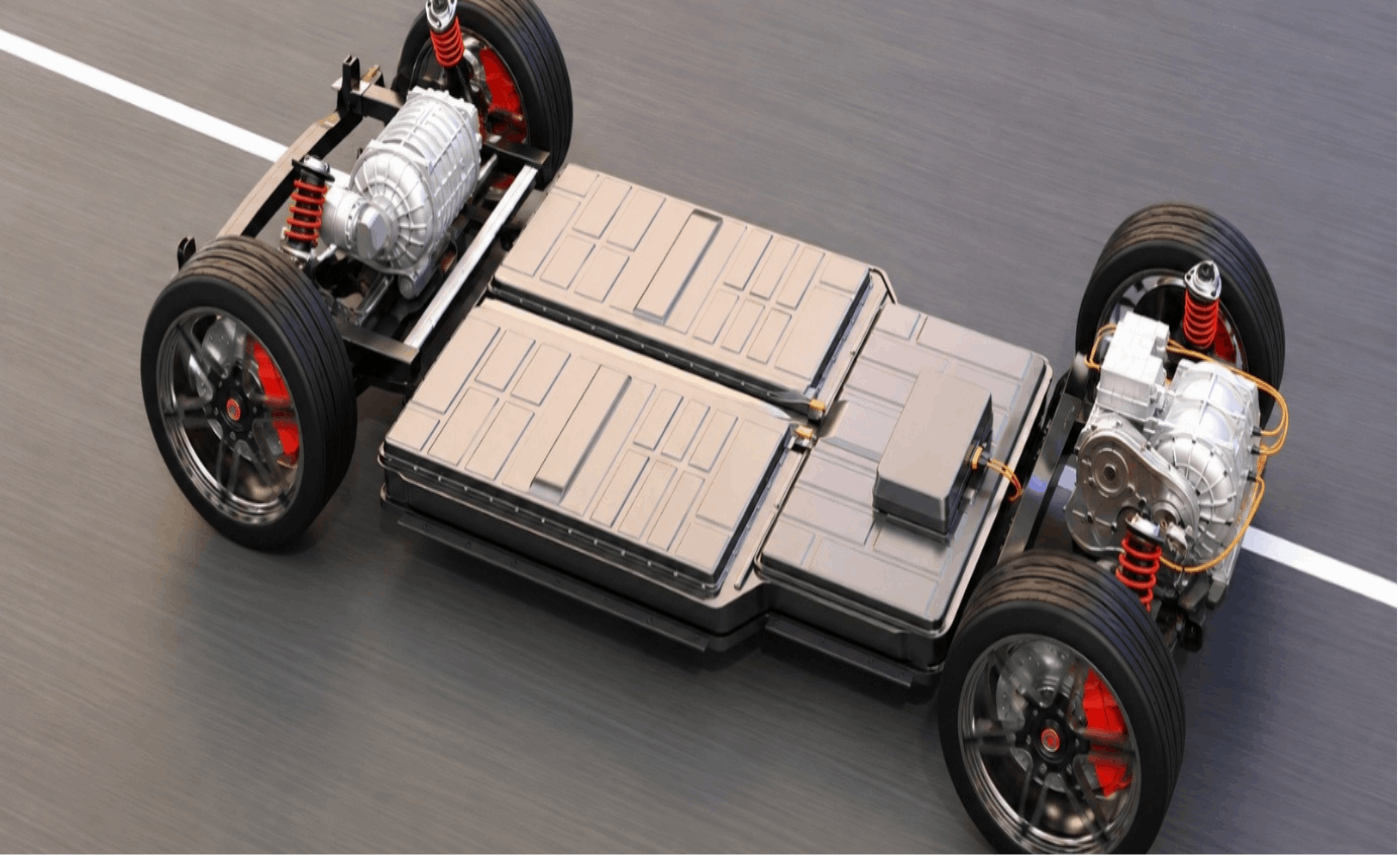
How Battery Technology Is Transforming the Electric Vehicles Market
Battery technology is emerging as a critical driver of India’s electr...
Partners




