Advantage India
Robust
Demand
*India has achieved a record Rs. 76.00 lakh crore (US$ 860 billion) in total exports (goods and services) in 2025–26, surpassing approximately US$ 825 billion (Rs. 69.76 lakh crore) in 2024–25.
*In FY2025-26, India's total exports (merchandise and services) reached Rs. 76.02 lakh crore (US$ 860.09 billion), compared with Rs. 72.91 lakh crore (US$ 825.26 billion) in FY2024-25, registering a growth of 4.22%.
*By 2030, the Indian middle class is expected to have the second-largest share in global consumption at 17%.

Increasing
Investment
*The key initiatives include the Production Linked Incentive (PLI) Scheme for Large Scale Electronics Manufacturing, PLI Scheme 2.0 for IT Hardware, Electronics Manufacturing Clusters (EMC and EMC 2.0) Scheme, Scheme for Promotion of Manufacturing of Electronic Components and Semiconductors (SPECS), and the Modified Programme for Development of Semiconductors and Display Manufacturing Ecosystem.
*The Cumulative FDI equity inflows (January 2000–March 2026) stood at Rs. 52,89,321.87 crore (US$ 788.53 billion).
*India has attracted over Rs. 33,824.18 crore (US$ 4 billion) by FY26 in FDI in electronics manufacturing since 2020-21, reflecting rising global investor confidence.

Policy
Support
*The Government of India continues to strengthen manufacturing through the Production Linked Incentive (PLI) Scheme, with an outlay of Rs. 1.91 lakh crore (US$ 21.61 billion), covering 14 strategic sectors and attracting strong industry participation.
*As of December 2025, PLI schemes have generated investments exceeding Rs. 2.16 lakh crore (US$ 24.44 billion), driving incremental production of over Rs. 20.41 lakh crore (US$ 230.95 billion) and creating over 14.39 lakh jobs, reinforcing India’s manufacturing ecosystem.
*In FY2025-26, the Government strengthened India's manufacturing ecosystem by approving the Electronics Components Manufacturing Scheme (ECMS) with an outlay of Rs. 22,919 crore (US$ 2.59 billion).

Competitive
Advantage
*Manufacturing continues to expand across sectors, with 8.00% growth recorded in November 2025, led by automobiles, pharmaceuticals and metals. Industrial activity remains robust, with IIP growth reaching 7.80% in December 2025, the highest in over two years, followed by 4.80% growth in January 2026, driven by manufacturing expansion.

Introduction
The Indian manufacturing sector is steadily emerging as a key pillar of the economy, contributing around 17% to GDP. The number of startups recognized increased by 51.6% year-on-year in FY 2025-26 compared to FY 2024-25, while direct jobs created rose by 36.1% during the same period. With government initiatives like Make in India and production-linked incentive (PLI) schemes, the National Mission on Manufacturing (NMM) announced in Budget 2025-26, serves as a key catalyst for industrial growth, targeting a rise in manufacturing’s GDP share to 25% by 2035, creation of 143 million jobs, and expansion of merchandise exports to Rs. 106.05 lakh crore (US$ 1.20 trillion) by through deeper global value chain integration.
Technology is playing a transformative role in reshaping the industry. Once anchored by the machine tool sector, India is now moving towards automation, digitalisation, and process-driven production. Digital transformation has spurred innovation, improved efficiency, and positioned manufacturers to remain competitive in global markets. The PMI moderated to 53.9 in March 2026, it recovered to 54.7 in April 2026 and further improved to 55.0 in May 2026, indicating sustained expansion in manufacturing activity driven by resilient demand, new orders and output.

India is also carving a niche in specialised global value chains. It has the potential to cater to 10% of the world’s wind energy demand by 2030 through its growing capacity in wind power component manufacturing. In electronics, domestic value addition has risen from 30% to 70% and is projected to reach 90% by FY27. India’s electronics manufacturing ecosystem is witnessing rapid expansion, with Apple’s India-based vendors exporting Rs. 22,094 crore (US$ 2.50 billion) worth of components to China in FY26, expected to reach Rs. 30,931 crore (US$ 3.50 billion) by the end of the year. This marks a significant shift in global supply chains, with India emerging as a supplier of high-value electronic components rather than just an assembly hub.
Under the smartphone Production Linked Incentive (PLI) scheme, India produced Rs. 6.19 lakh crore (US$ 70.00 billion) worth of iPhones, of which Rs. 4.51 lakh crore (US$ 51.00 billion) (73%) were exported, highlighting strong export competitiveness.
Complementing this, the Government of India has approved 10 semiconductor manufacturing projects with investments of around Rs. 1.60 lakh crore (US$ 18.11 billion), aimed at strengthening domestic capabilities and positioning India as a global electronics manufacturing hub.
The government has reinforced manufacturing growth through sustained policy support, including the Production Linked Incentive (PLI) scheme, infrastructure development and innovation-led initiatives. In the Union Budget 2026–27, additional measures such as tax incentives, customs duty rationalisation and export facilitation reforms were introduced to improve ease of doing business and strengthen India’s integration into global value chains.
The policy framework also includes targeted sectoral interventions such as duty-free inputs and extended export timelines for footwear and leather products, along with broader support for labour-intensive industries. These measures aim to enhance competitiveness, boost exports and promote large-scale employment generation in manufacturing.
Investment trends further underline the sector’s dynamism. According to the White & Case, India ranked eight among the top recipients of Foreign Direct Investment (FDI) in the world in 2023.
100% FDI is approved in the sector through automatic route under the current FDI Policy. In FY2025-26, India's gross Foreign Direct Investment (FDI) inflows reached a record Rs. 8,35,070.61 crore (US$ 94.53 billion), registering 17% year-on-year growth.
Complementing this, India’s digital economy is projected to account for 20% of GDP by 2029-30, growing twice as fast as the overall economy. This widespread digitalisation, coupled with manufacturing growth, will reinforce India’s role in global supply chains.
A globally competitive manufacturing sector represents one of India’s greatest opportunities to drive growth, employment, and exports in the coming decade. With strong policy backing, a skilled workforce, rising FDI, and a shift toward automation and clean technologies, India is making a credible bid to establish itself as a global manufacturing hub.
Capacity utilisation in the manufacturing sector is measured by Reserve Bank of India (RBI) in its quarterly order books, inventories and capacity utilisation survey. It indicates not only the production levels of companies but also the potential for future investment. In FY2025-26, capacity utilisation in the manufacturing sector, as measured by the Reserve Bank of India's Order Books, Inventories and Capacity Utilisation Survey (OBICUS), increased from 74.10% in Q1 to 74.30% in Q2 and further to 75.60% in Q3, indicating sustained improvement in manufacturing activity and production capacity utilisation.
Market Size
Between FY2014-15 and FY2025-26, India's total exports increased from Rs. 41.36 lakh crore (US$ 468 billion) to a record Rs. 76.26 lakh crore (US$ 863 billion), registering a CAGR of 5.70%. Merchandise exports rose from Rs. 27.39 lakh crore (US$ 310 billion) to Rs. 39.06 lakh crore (US$ 442 billion), while services exports increased from Rs. 13.96 lakh crore (US$ 158 billion) to Rs. 37.20 lakh crore (US$ 421 billion), recording a CAGR of 9.30%. Engineering goods, electronic goods, pharmaceuticals, textiles, agricultural products, marine products, and gems and jewellery emerged as the key drivers of India's export growth. Looking ahead, India’s e-commerce exports are projected to grow from Rs. 8,757 crore (US$ 1 billion) to Rs. 35,02,800 crore (US$ 400 billion) annually by 2030, which will aid in achieving Rs. 1,75,14,000 crore (US$ 2 trillion) in total exports. By the same year, the Indian middle class is expected to have the second-largest share in global consumption at 17%. India’s manufacturing sector continues to strengthen, with the potential to reach Rs. 88,37,524 crore (US$ 1.00 trillion) by FY26, supported by strong policy push and rising domestic demand.

Manufacturing Gross Value Added (GVA) grew by 11.60% in FY2025-26, up from 8.30% in FY2024-25, reflecting strong growth in India's manufacturing sector. The country could add more than Rs. 44.19 lakh crore (US$ 500.00 billion) annually to the global economy by 2030 if it fully realises its potential as a global manufacturing hub. In parallel, sectoral expansion remains strong. In FY25, electronics exports accounted for 10% of India's total exports, compared with 3% in FY15, Exports rose from Rs. 38,000 crore (US$ 4.49 billion) to Rs. 3.27 lakh crore (US$ 38.68 billion) in the same period, reflecting an eight-fold jump. Over the past decade, electronics manufacturing has created around 25 lakh jobs across the country.5
The Indian startup ecosystem has also shown resilience and momentum. The number of startups recognized increased by 51.6% year-on-year in FY 2025-26 compared to FY 2024-25, while direct jobs created rose by 36.1% during the same period.
The Nominal GVA is estimated to attain a level of Rs. 323.48 lakh crore (US$ 3.66 trillion) during FY 2025-26, against Rs. 300.22 lakh crore (US$ 3.55 trillion) in FY 2024-25, showing a growth rate of 7.7%.
Investment
Some of the major investments and developments in this sector in the recent past are:
- Driven by policy reforms, targeted incentives, and a renewed focus on cluster-based industrial development, India’s manufacturing sector is undergoing transformation. New hubs are emerging across states under flagship programmes like Make in India, Production Linked Incentive (PLI) schemes, and the expansion of industrial corridors. These Make in India manufacturing clusters—spanning electronics, semiconductors, pharmaceuticals, automobiles, textiles, and biomedical industries—are supported by robust infrastructure, skilled talent, and government facilitation.
- The spotlight is on the emerging manufacturing clusters in India 2025, which combine global investment interest with India’s domestic capacity-building agenda. From the electronics manufacturing corridors in Uttar Pradesh to the semiconductor zones in Gujarat and the nationwide PM MITRA textile parks, India’s industrial landscape is being reshaped. These seven ecosystems are set to become the foundation of India’s ascent as a global manufacturing powerhouse.
- Government-led infrastructure and logistics reforms are enabling manufacturing expansion through sustained investments in connectivity, industrial infrastructure, and planning systems.
- The PM GatiShakti initiative has transformed infrastructure planning through a unified platform integrating over 1,700 data layers across 57 ministries and departments. PM GatiShakti Public and the Unified Geospatial Interface now provide 230 datasets for investment and logistics planning. At the state level, 27 states have notified logistics policies, while 28 aspirational districts are utilising the District Master Plan Module for integrated development.
- Complementing this, the National Logistics Policy (NLP) is strengthening logistics integration through the Unified Logistics Interface Platform (ULIP), which connects 44 systems across 11 ministries, covering over 2,000 data fields, supporting 1,700+ companies, and enabling over 200 crore API transactions.
- Industrial corridor development is also progressing, with cities such as Dholera and Greater Noida emerging as key manufacturing hubs. Over 350 industrial plots have been allotted, supported by investments of Rs. 2.02 lakh crore (US$ 22.86 billion).
- These initiatives reflect a coordinated push to enhance manufacturing competitiveness, improve logistics efficiency, and support sustained manufacturing-led economic growth.
- The Defense Acquisition Council, chaired by Union Minister of Defence Mr. Rajnath Singh, has approved Rs. 67,000 crore (US$ 7.65 billion) worth of projects to strengthen the Indian Army, Navy, and Air Force. The move focuses on boosting ‘Make in India’ with key roles for Hindustan Aeronautics Limited (HAL), Bharat Electronics Limited (BEL), and Bharat Dynamics Limited (BDL).
- Under the "Make in India" initiative, the Marhowrah Diesel Locomotive Factory in Bihar is set to export 150 Evolution Series ES43ACmi locomotives to Guinea for its Simandou iron ore project. Developed in partnership with Wabtec, this export deal is valued at over Rs. 3,000 crore (US$ 345.9 million) and significantly expands India’s global footprint in railway manufacturing.
- The Department for Promotion of Industry and Internal Trade (DPIIT) has signed a Memorandum of Understanding (MoU) with Electric Vehicle (EV) manufacturer Ather Energy on July 29, 2025, to foster growth and innovation within India’s EV and manufacturing startup ecosystem. This collaboration aims to provide strategic mentorship and infrastructure support to deep-tech startups engaged in the EV value chain, including areas such as battery technology, vehicle manufacturing, and clean energy solutions.
- On July 30, 2025, Samsung, has signed a strategic Memorandum of Understanding (MoU) with Startup India, a flagship initiative of the Government of India. The collaboration aims to identify and nurture high-potential talent, especially from Tier II and Tier III cities, by providing access to infrastructure, expert guidance, market linkages, and funding opportunities.
- In July 2025, Startup India has identified Wayanad as the next potential startup hub in Kerala, aiming to build a strong ecosystem for innovation and entrepreneurship in the region. This initiative is part of a broader effort by Startup India the Government of India's flagship program, to foster sustainable economic growth and generate employment opportunities through startups.
- According to NITI Aayog report, India can potentially capture a larger global market share, targeting Rs. 2,13,925 crore (US$ 25 billion) in exports by 2035.
- According to the Council for Leather Exports (CLE), India’s leather, non-leather footwear, and products exports increased by 25% at Rs. 48,667 crore (US$ 5.7 billion) in FY25, may hit Rs. 55,497 crore (US$ 6.5 billion) in FY26.
- Global Capability Centres in India are estimated to create around 4.25–4.50 lakh new jobs in 2025 alone, with the total workforce reaching approximately 2.4 million professionals in 2025–26. The sector is projected to employ 2.8–3.5 million professionals by 2030.
- India’s GCCs witnessed an 8–10% increase in hiring volumes in Q1 FY26, compared with a 3–6% decline in Q4 FY25. The manufacturing, automotive and energy sectors recorded the highest demand growth at 31% quarter-on-quarter, driven by increased investments in smart factories, Industrial Internet of Things (IIoT) and electric vehicle (EV) platforms.
- The Department for Promotion of Industry and Internal Trade (DPIIT) has partnered with Hafele India to support manufacturing startups by promoting innovation, local sourcing, and global market integration, while providing mentorship, infrastructure, and ecosystem access via Startup India.
- With Rs. 14,93,975 crore (US$ 175 billion) in funding and 76 IPOs in 2024, India is preparing for significant growth in the startup sector.
- Shree Cement has signed a Memorandum of Understanding (MoU) with the Department for Promotion of Industry and Internal Trade (DPIIT) to support manufacturing sector startups by providing infrastructure, mentorship, funding access, and market connections, aiming to enhance India's manufacturing ecosystem and promote self-reliance through domestic innovation.
- In FY2025-26, India's defence exports reached a record Rs. 38,424 crore (US$ 4.35 billion), registering a 62.70% increase year-on-year. The government aims to raise defence exports to Rs. 50,000 crore (US$ 5.71 billion) by 2029. This growth has been driven by both Defence Public Sector Undertakings, which saw a 42.85% export increase, and a strong private sector contribution.
- Sansera Engineering Limited has signed an MoU with the Karnataka government to invest Rs. 2,100 crore (US$ 251 million) in a new manufacturing facility in Ramanagara, aiming to create 3,500 jobs and enhance production capacity in the automotive and non-automotive sectors over the next three to five years.
- Google is set to begin manufacturing Pixel smartphones in India, specifically in Tamil Nadu, in collaboration with Foxconn and Dixon Technologies. This production aims to cater primarily to export markets in Europe and the US, with operations expected to start in September 2024. The initiative comes as Google prepares to launch its Pixel 9 series in India on August 13, leveraging India's Production-Linked Incentive (PLI) scheme to enhance manufacturing scalability.
- Maruti Suzuki has begun exporting the Made-in-India Fronx compact SUV to Japan, marking its first SUV launch in the Japanese market. Manufactured at its Gujarat plant, the first shipment of over 1,600 vehicles has already left for Japan, with the official launch planned for autumn 2024.
- India's first 'Made in India' chip is expected by December 2025, supported by the Rs. 76,000 crore (US$ 8.79 billion) Semicon India program. Foreign investments are also flowing in, with NXP Semiconductors planning to invest Rs. 8,644 crore (US$ 1 billion) in R&D and Micron Technology setting up a Rs. 23,771 crore (US$ 2.75 billion) plant in Gujarat. India's semiconductor market is projected to reach Rs. 5,44,572 crore (US$ 63 billion) by 2026.
- According to Department for Promotion of Industry and Internal Trade (DPIIT), India received a total foreign direct investment (FDI) inflow of Rs. 4,03,251 crore (US$ 46.42 billion) in FY24. FDI.
- According to the White & Case, India ranked eight among the top recipients of Foreign Direct Investment (FDI) in the world in 2023. 100% FDI is approved in the sector through automatic route under the current FDI Policy. The Union Minister of Commerce and Industry, Mr. Piyush Goyal, highlighted significant progress in domestic manufacturing. Notably, around 99% of mobile phones sold in India are now manufactured domestically, supported by strong policy incentives and rising Foreign Direct Investment (FDI).
- Cumulative FDI equity inflow (April 2000–December 2025) stood at Rs. 50,72,333 crore (US$ 776.76 billion).
- Between January 2000 and March 2026:
- The Automobile Industry received cumulative FDI equity inflows of Rs. 2,70,905.27 crore (US$ 40.47 billion).
- The Chemicals (excluding fertilisers) sector received cumulative FDI equity inflows of Rs. 1,50,177.05 crore (US$ 24.07 billion).
- The Drugs & Pharmaceuticals sector received cumulative FDI equity inflows of Rs. 1,59,280.15 crore (US$ 25.37 billion).
- The Computer Software & Hardware sector received cumulative FDI equity inflows of Rs. 9,07,355.53 crore (US$ 124.67 billion).
- Foreign Direct Investment (FDI) in India's manufacturing sector has surged nearly 69% over the past decade, reaching Rs. 14,34,224 crore (US$ 165.1 billion) accounting for around 21% of cumulative FDI inflows. This growth is largely attributed to production-linked incentive (PLI) schemes, which have driven significant investments and job creation.
- India aims for Rs. 8,68,700 crore (US$ 100 billion) annual foreign direct investment (FDI) in the coming years, according to Union Minister of Information and Broadcasting, Mr. Ashwini Vaishnaw, as part of the government's strategy focused on infrastructure investment, social upliftment, manufacturing growth, and simplification of business processes, amidst projections of consistent 6-8% economic growth over the next decade.
- For the month of June 2025, the Quick Estimates of Industrial Production (IIP) with base 2011-12 stands at 153.3. The Indices of Industrial Production for the Mining, Manufacturing and Electricity sectors for the month of June 2025 stand at 123.2, 152.3, and 217.1, respectively.
- In FY2025-26, the Index of Industrial Production (IIP) for the manufacturing sector grew by 4.90%, reflecting sustained expansion in manufacturing activity during the year under the revised 2022-23 base year series.
- The Index of Industrial Production (IIP), compiled by the Ministry of Statistics and Programme Implementation (MoSPI), measures industrial activity across the mining, manufacturing and electricity sectors, with manufacturing accounting for 77.63% of the overall index (base year: 2011-12). Over the past decade, the manufacturing sector has remained the key driver of industrial production, while mining and electricity have also contributed to overall industrial growth.
- Industrial production witnessed a strong rebound in 2021-22, with the General IIP recording its highest annual growth of 11.4%, driven by robust growth in manufacturing (11.8%), mining (12.2%) and electricity (7.9%) following the pandemic-induced contraction in 2020-21. In 2025-26, industrial activity remained positive, with the General IIP growing by 4.1%, supported by manufacturing (5.0%), mining (1.4%) and electricity (1.0%), indicating continued expansion across key industrial sectors despite a moderation in growth compared with previous years
- As per the Use-Based Classification, the indices stood at 119.6 for Primary Goods, 135.3 for Capital Goods, 123.1 for Intermediate Goods and 130.8 for Infrastructure/Construction Goods in May 2026. Further, the indices for Consumer Durables and Consumer Non-durables stood at 120.4 and 118.4, respectively.
- In FY2025-26, capacity utilisation in the manufacturing sector, as measured by the Reserve Bank of India's Order Books, Inventories and Capacity Utilisation Survey (OBICUS), increased from 74.10% in Q1 to 74.30% in Q2 and further to 75.60% in Q3, indicating sustained improvement in manufacturing activity and production capacity utilisation.
- Forward-looking indicators continue to reflect optimism in India’s industrial sector, with the manufacturing Purchasing Managers’ Index (PMI) remaining firmly in expansion zone (well above the 50 mark) since March 2023. In January 2026, PMI stood at 55.4, above its long-run average, indicating continued improvement in the sector’s health.
- In March 2026, the Government promoted global collaborations in aerospace manufacturing, highlighting joint ventures with international companies such as Embraer and Sukhoi to establish manufacturing facilities and strengthen India's aerospace production capabilities.
- In May 2025, the Employees' Provident Fund Organisation (EPFO) added a net total of 20.06 lakh members, which is the highest recorded addition since data tracking began in April 2018, marking a 2.84% YoY growth with 9.42 lakh new members enrolled, largely driven by increased employment opportunities and effective outreach initiatives. Notably, the 18-25 age group accounted for 59.48% of the total new subscribers, adding 5.60 lakh new subscribers. Female membership also saw significant growth, with 2.62 lakh new female subscribers joining, marking a 5.84% YoY growth compared to May 2024, and indicating a shift towards a more inclusive workforce.
- In December 2025, GIGABYTE Technology commenced local production of motherboards in India through a contract manufacturing partnership, supporting the Make in India initiative, reducing import dependence and strengthening the country's electronics manufacturing ecosystem.
- Amazon Inc’s cloud computing division, Amazon Web Services, became the latest company to invest in India. The company has planned to invest Rs. 1,12,931 crore (US$ 13 billion) in India by 2030 to build its cloud infrastructure and create thousands of jobs.
- On February 29, 2024, India approved the construction of three semiconductor plants with investments exceeding Rs. 1,30,305 crore (US$ 15 billion). These plants aim to establish India as a major chip hub, with Tata Electronics, Tata Semiconductor Assembly and Test Pvt Ltd, and CG Power spearheading the projects in Gujarat and Assam. This initiative aligns with India's goal to bolster its semiconductor ecosystem and create numerous advanced technology jobs.
Government Initiatives
The Union Budget 2026-27 launched new schemes and programmes focusing on high-impact and emerging industries to drive the next phase of industrial growth, with a focus on scaling up manufacturing across seven strategic and frontier sectors.
- Rejuvenation of Legacy Industrial Clusters: A scheme to revive 200 legacy industrial clusters through infrastructure and technology upgradation to improve competitiveness and efficiency through infrastructure and technology upgradation.
- Biopharma SHAKTI: With an outlay of Rs. 10,000 crore (US$ 1.13 billion) over five years, the scheme aims to position India as a global manufacturing hub for biologics and biosimilars. It aims to expand research capacity, set up 3 new and upgraded National Institutes of Pharmaceutical Education and Research (NIPER) institutes, a network of 1000+ clinical trial sites, and strengthen Central Drugs Standard Control Organisation (CDSCO).
In FY2025-26, the Government strengthened India's manufacturing ecosystem by approving the Electronics Components Manufacturing Scheme (ECMS) with an outlay of Rs. 22,919 crore (US$ 2.59 billion).
Key initiatives have been introduced to strengthen India’s manufacturing ecosystem across high-growth sectors. Under Semiconductor Mission 2.0, the focus is on developing semiconductor equipment, full-stack domestic IP, resilient supply chains, and industry-led R&D ecosystems.
- To boost domestic production, the government is supporting the establishment of three chemical parks under a cluster-based model, while the Electronics Components Manufacturing Scheme (ECMS) outlay has been increased to Rs. 40,000 crore (US$ 4.53 billion) from Rs. 22,919 crore (US$ 2.59 billion).
- Strategic initiatives such as rare earth corridors across key states aim to strengthen critical mineral supply chains, alongside schemes for container manufacturing with an allocation of Rs. 10,000 crore (US$ 1.13 billion) and enhanced focus on construction equipment manufacturing.
- The government is also promoting sectoral growth through mega textile parks, integrated textile programmes, and initiatives to strengthen khadi, handloom, and handicrafts. Additionally, MSMEs are being supported through a Rs. 10,000 crore (US$ 1.13 billion) SME Growth Fund and a Rs. 2,000 crore (US$ 0.23 billion) top-up to the Self-Reliant India Fund.
The Union Budget 2026-27 introduced targeted tax and customs reforms to enhance manufacturing competitiveness and support exports. Key measures include tax exemptions and safe harbour provisions for non-residents engaged in toll manufacturing and component warehousing in bonded zones, along with a deferred duty payment window for trusted manufacturers.
- Export-oriented incentives have been strengthened by increasing the duty-free import limit for seafood processing inputs from 1% to 3% of FOB value, extending duty-free benefits to shoe uppers, and increasing export timelines for leather and textile products from six months to one year.
- Customs duty exemptions have been provided on select inputs for electronics and aircraft manufacturing, including components for microwave ovens and maintenance, repair, and overhaul (MRO) of aircraft. Trade facilitation measures such as electronic cargo sealing, recognition of trusted importers, and concessional domestic sales by SEZ units further streamline logistics and compliance.
- These reforms align with the government’s continued push to position India as a globally competitive manufacturing hub, driving exports, innovation, and integration into global value chains.
Sustained Government Initiatives Driving Manufacturing Growth
India’s manufacturing growth is being driven by targeted incentive schemes, mission-led reforms, and strong investment momentum, creating a robust foundation for long-term industrial expansion.
The Production Linked Incentive (PLI) scheme, aligned with the Aatmanirbhar Bharat vision, has emerged as a key catalyst across 14 sectors. It has significantly boosted electronics, pharmaceuticals, and automobile manufacturing. Under the scheme, smartphone production has expanded rapidly, positioning India as a global manufacturing hub. In pharmaceuticals, cumulative sales crossed Rs. 2.63 lakh crore (US$ 31.10 billion), including exports of Rs. 1.69 lakh crore (US$ 19.98 billion), with domestic value addition reaching 83.74% as of March 2025. The PLI scheme for automobiles and auto-components has attracted investments of Rs. 35,657 crore (US$ 4.22 billion) and generated 48,974 jobs as of September 2025.
In FY2025-26, smartphone manufacturing under the Production Linked Incentive (PLI) Scheme surpassed its targets, with cumulative production reaching Rs. 6.66 lakh crore (US$ 75.36 billion) against the FY2024 target of Rs. 4.39 lakh crore (US$ 49.68 billion). Cumulative investments also increased to Rs. 9,100 crore (US$ 1.03 billion), exceeding the scheme's FY2026 target of Rs. 7,000 crore (US$ 0.79 billion), reinforcing the Government's Make in India and Aatmanirbhar Bharat initiatives.
In FY2025-26, the Government launched the National Manufacturing Mission (NMM) to increase manufacturing's share in GDP to 25% by 2035, create 143 million jobs, and expand merchandise exports to Rs. 106.04 lakh crore (US$ 1.20 trillion) through deeper global value chain integration. Implementation is underway through an inter-ministerial framework led by NITI Aayog, focusing on ease of doing business, MSME growth, skilling, and technology adoption, alongside sector-specific initiatives such as textiles, toys, and leather.
Investment momentum remains strong in FY26, with gross fixed capital formation estimated at 30% of GDP and growing by 7.6% in H1 FY26. Government capital expenditure has increased from Rs. 3.07 lakh crore (US$ 37.09 billion) in FY19 to Rs. 11.21 lakh crore (US$ 126.84 billion) in FY26, while private corporate investment announcements rose to Rs. 14.6 lakh crore (US$ 165.20 billion) in H1 FY26, compared with Rs. 7.9 lakh crore (US$ 94.39 billion) in the same period of FY25.
Road Ahead
India’s manufacturing sector is witnessing steady expansion, supported by policy measures, infrastructure development, and improving industrial performance indicators. While the target of reaching US$ 1 trillion by FY26 remains a medium-term benchmark, recent trends such as manufacturing GVA growth of 7.72% in Q1 and 9.13% in Q2 of FY26 indicate continued momentum in the sector.
Government-led initiatives, particularly in infrastructure and logistics, are strengthening the enabling ecosystem. Platforms such as PM GatiShakti and the National Logistics Policy are improving planning efficiency, supply chain integration, and data-driven decision-making. At the same time, industrial corridor development, with investments of Rs. 2.02 lakh crore (US$ 22.86 billion) is facilitating the creation of new manufacturing hubs. Overall, the combination of policy support, infrastructure expansion, and stable industrial growth indicators suggests a gradual strengthening of India’s manufacturing base and its integration into global value chains.
References: Central Statistics Office, FICCI, Economic Survey of India, DPIIT, Media sources, Ministry of Skill Development and Entrepreneurship, Union Budget 2026-27, Press Information Bureau, News Articles

FAQs
India's manufacturing industry spans automobiles, electronics, semiconductors, pharmaceuticals, chemicals, textiles, engineering, aerospace, defence, food processing, and renewable energy equipment. These industries are driving exports, employment, and India's integration into global value chains.
Leading manufacturing companies in India include Tata Electronics, Reliance Industries, Maruti Suzuki, Tata Motors, Bharat Electronics (BEL), Hindustan Aeronautics (HAL), Larsen & Toubro (L&T), Mahindra & Mahindra, Dixon Technologies, and Foxconn India. These companies are expanding domestic production while strengthening India's export competitiveness.
The manufacturing sector contributes around 17% of India's GDP, drives exports, attracts record FDI, and creates large-scale employment. Rising domestic value addition, improving capacity utilisation, and strong manufacturing GVA growth are reinforcing India's position as a global production hub.
The Government is accelerating manufacturing through Make in India, the Production Linked Incentive (PLI) Scheme, the National Manufacturing Mission (NMM), PM GatiShakti, National Logistics Policy, Semiconductor Mission 2.0, and targeted tax and customs reforms to improve global competitiveness.
Make in India has strengthened domestic manufacturing by attracting global investments, expanding electronics and smartphone production, promoting semiconductor manufacturing, and increasing exports. Combined with PLI schemes, it has improved domestic value addition and positioned India as a preferred global manufacturing destination.
The outlook for manufacturing companies in India remains strong, supported by the National Manufacturing Mission, rising FDI, semiconductor investments, industrial corridors, and PLI schemes. The Government aims to raise manufacturing's GDP share to 25% by 2035, creating 143 million jobs and significantly boosting exports.
Related News
MOREManufacturing Clusters
- Maharashtra
- Tamil Nadu
- Gujarat
- Telangana
- Andhra Pradesh
- Karnataka
- Uttar Pradesh

Posters
MORE
PREFERRED MANUFACTURING DESTINATION
India ranks third in most-suitable locations for global manufacturing.
IBEF Campaigns
MORE

Aatmanirbhar Bharat Utsav 2024
Union Minister of External Affairs, Dr. S. Jaishankar and Union Commerce an...
Case Studies
MOREThe Rise of India's Pathology Laboratories: Strengthening Quality and Safety in Healthcare

India has seen its healthcare system witness an impressive evolution in the last two decades because of the growth in healthcare infrastructure, incre...
SUV Dominance and the Future of Passenger Vehicles

India's passenger vehicle industry over the past two decades have been gone under significant changes. In particular, the market has been transfor...
Expressway Infrastructure Development Outlook in India
India's vision of becoming a Viksit Bharat by 2047 has positioned transport infrastructure as a cornerstone of its long-term economic growth strat...
IBEF BLOG
MORE
How Emerging Railway Food Services Are Improving the Passenger Experience
Indian railways food services have been witnessing a paradigm shift enabled...
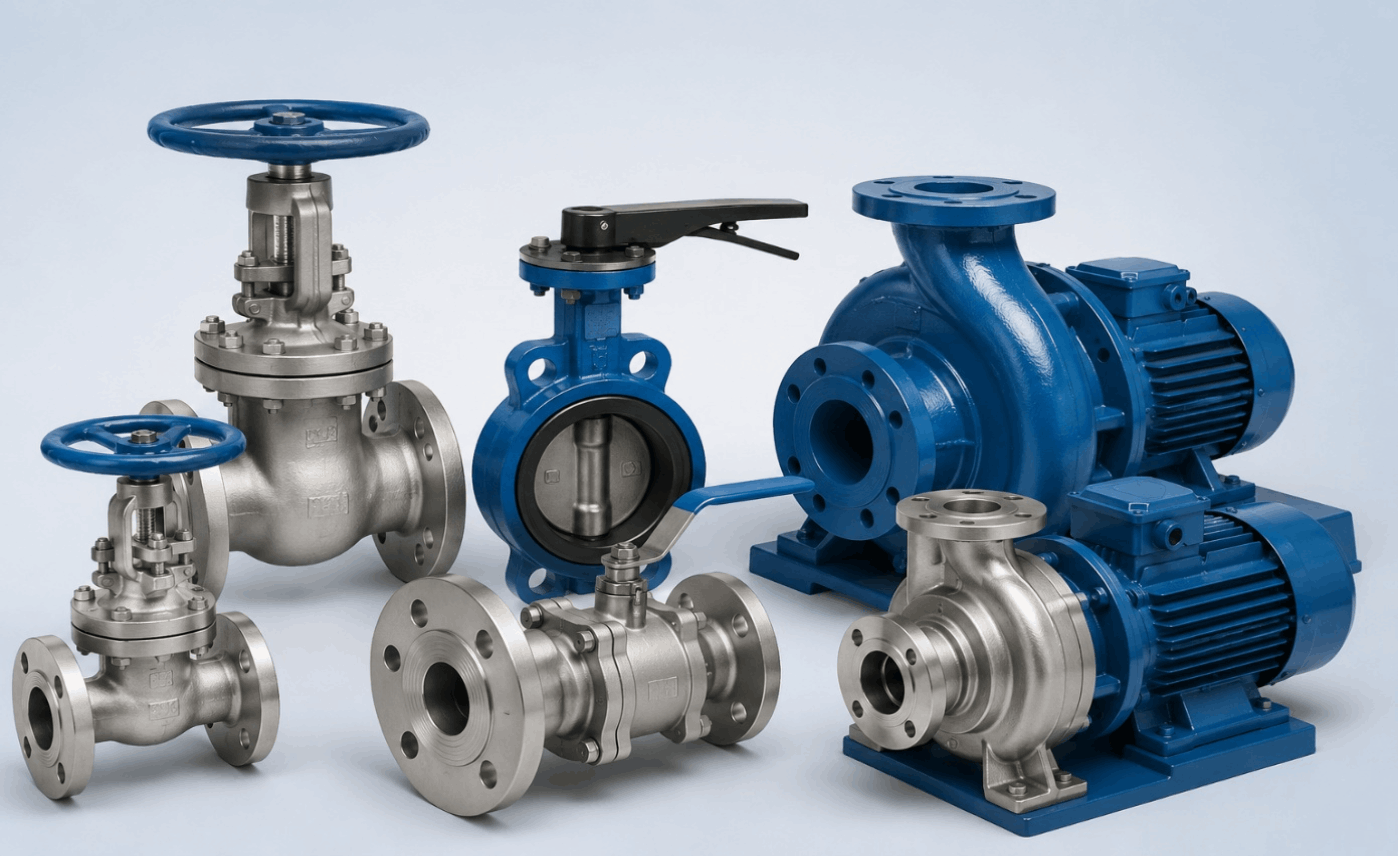
How India's Industrial Valve and Pump Industry Supports Infrastructure and Manufacturing
Pumps and industrial valves represent the basic building blocks of today&rs...

India's Premium Fresh Produce Exports: Creating New Opportunities for Farmers
India has emerged as a major exporter of horticulture crops owing to the pr...
Partners




