Introduction
The civil aviation industry in India has emerged as one of the fastest-growing sectors of the economy, playing a vital role in connectivity, trade, and tourism. It encompasses scheduled air transport services (domestic and international airlines), non-scheduled services such as charter flights and air taxis, as well as dedicated air cargo services for transporting goods and mail.
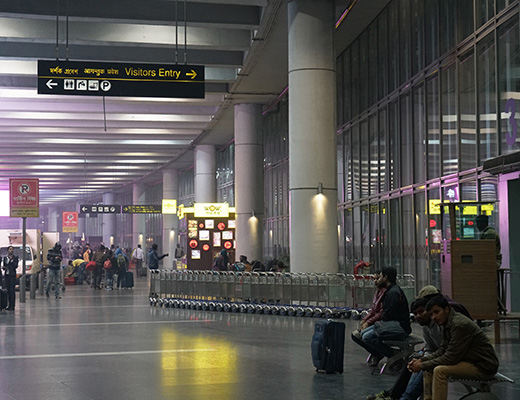
India is currently the third-largest domestic aviation market in the world, supported by rising disposable incomes, urbanisation, and increasing preference for air travel. Passenger traffic (domestic + international) stood at 420.09 million during FY26 (April-March 2026), while freight traffic reached 3.96 MMT in the same period. The sector is also backed by a rapidly expanding airport network, which has grown from 74 airports in 2014 to 164 as of 2026. Among carriers, IndiGo continues to dominate with the highest market share, supported by a strong fleet and extensive domestic and international routes.
Market Size
India is expected to overtake China and the United States to become the world’s third-largest air passenger market by 2030, according to the International Air Transport Association (IATA). The rising demand has also accelerated fleet expansion, with the number of airplanes projected to reach 1,100 by 2027.
Domestic passenger and international passenger traffic combined increased at a CAGR of 7.23% and 3.95%, respectively, in FY26. In FY26, airports in India pegged the domestic passenger traffic to be 339.45 million, a 1.4% YoY increase, and international passenger traffic to be 80.64 million, a 4.2% YoY increase, as compared to FY25. Freight movement has also grown steadily. Between FY16 and FY25, total freight traffic increased at a CAGR of 2.80%, from 2.70 MMT to 3.71 MMT. In FY26 (April-March 2026), domestic freight traffic increased by 7.4% as compared to FY25 (April-March 2025). In FY26, domestic freight traffic stood at 1,512 thousand MT, and international freight traffic was 2,452 thousand MT.

Aircraft movement has risen in parallel with passenger and freight growth. From FY17 to FY25, aircraft movement grew at a CAGR of 3.85%, increasing from 2.05 million to 2.87 million. In FY24, the sector recorded robust capacity and demand growth, with Available Seat Kilometers (ASK) in domestic flights reaching 162,289 million km, while Revenue Passenger Kilometers (RPK) stood at 148,251 million km.
To accommodate rising traffic, the Government of India has significantly expanded aviation infrastructure. The country’s airport network has grown from 74 airports in 2014 to 163 airports in 2025, more than doubling in a decade.
Key investments and developments
- In May 2026, Adani Airports invested over Rs. 20,000 crore (US$ 2.26 billion) in the first phase of integrated airport city developments across six airports in five states, creating mixed-use hubs comprising hotels, offices, retail, entertainment and convention centres with seamless airport and metro connectivity.
- In March 2026, Prime Minister Mr. Narendra Modi inaugurated Phase I of Noida International Airport, one of India's largest greenfield airport projects. Developed under the Public-Private Partnership (PPP) model with an investment of approximately Rs. 11,200 crore (US$ 1.27 billion), the airport has an initial passenger handling capacity of 12 million passengers annually, scalable to 70 million passengers upon full development.
- Airbus expects India’s commercial aircraft fleet to nearly triple to around 2,200 planes over the next decade, driven by strong passenger traffic growth, airport expansion, and increasing airline capacity.
- The Cabinet Committee on Economic Affairs approved the development of a civil enclave at Srinagar International Airport at an estimated cost of Rs. 1,677 crores (US$ ~200 million) to enhance aviation infrastructure and connectivity in the Kashmir Valley.
- Airbus, in partnership with Gati Shakti Vishwavidyalaya (GSV), inaugurated a Centre of Excellence for aerospace studies in Vadodara to strengthen India’s aerospace ecosystem through R&D, innovation, and skill development.
- In November 2025, Safran opened a Rs. 1,300 crore (US$ 145 million) aircraft engine MRO facility in Hyderabad to service LEAP engines for global fleets.
- India’s role in the global aerospace supply chain has risen from supplying about Rs. 2,147 crore (US$ 250 million) a decade ago to around Rs. 17,178 crore (US$ 2 billion) annually in 2025, driven by growing aircraft-parts exports and expansion by domestic suppliers.
- Cumulative FDI inflows in India’s air transport sector (including air freight) reached Rs. 45,913 crore (US$ 5.36 billion) between April 2000-June 2025.
- In 2025, India’s aviation sector is hitting new heights as Mumbai and Delhi prepare to launch secondary airports like the Navi Mumbai International Airport and Noida International Airport respectively, to ease congestion at primary hubs, boost capacity and connectivity, and meet surging demand
- On September 4, 2025, Union Civil Aviation Minister Mr. Kinjarapu Ram Mohan Naidu said the government aims to develop the Northeast as a logistics and aviation hub connecting India with Southeast Asia, with 16 operational airports and rising international traffic from Guwahati.
- In September 2025, Air India SATS Airport Services (AISATS) became the first ground handling company in India to secure the DGCA’s Safety Clearance under CAR, aligning national operations with ICAO standards and making India the second country globally to regulate ground handling formally.
- In August 2025, Air India Express became the fourth Indian carrier alongside Air India, IndiGo and SpiceJet to join the International Air Transport Association (IATA) as a fully-fledged member, enhancing its global aviation integration with a fleet of 115 aircraft operating about 500 daily flights to 38 domestic and 17 international destinations.
- Delhi’s Indira Gandhi International Airport T3 is planning to boost its international capacity by 50% by 2025, increasing from two crore to three crore passengers annually.
- The Andhra Pradesh government plans to launch seaplane services across eight locations, backed by techno-economic feasibility studies, environmental clearances, and Detailed Project Reports (DPRs), with the first water aerodromes expected to be operational by January 2026.
- JSW Group Chairman Mr. Sajjan Jindal announced a Rs. 16,000 crore (US$ 1.9 billion) investment to develop a 1,600 MW power project in Salboni, West Bengal, along with plans to establish an industrial park and enhance infrastructure at Durgapur airport.
- Sarala Aviation, a Bengaluru-based startup, has unveiled its prototype air taxi, Shunya, designed for 20-30 km trips at speeds up to 250 kmph. Targeting launch by 2028, Shunya aims to combat traffic congestion and pollution. It accommodates six passengers, with plans to expand to other cities and introduce a free air ambulance service.
- Air Kerala, a new airline, has announced plans to launch its operations in June 2025, with its inaugural flight departing from Kannur International Airport.
- Air India Express has launched a daily direct flight service between Mangaluru International Airport and Delhi International Airport, significantly enhancing travel convenience for passengers. The inaugural flights transported 167 passengers to Mangaluru and 144 passengers from Mangaluru, both of which were celebrated with a water cannon salute. This new service is designed to benefit travelers and improve overall connectivity.
- Garuda Aerospace is poised to invest Rs. 100 crore (US$ 11.6 million) to develop a 'Drone City' in Orvakal village, Andhra Pradesh. This initiative is intended to enhance drone innovation, attract skilled talent, and position India as a leader in drone technology. The announcement was made during a strategic meeting with the Minister of Civil Aviation.
- Air India has established a codeshare partnership with Kenya Airways, enabling passengers to book combined journeys on a single ticket. This collaboration involves placing Air India’s 'AI' code on Kenya Airways' Nairobi-Mumbai flights and vice versa. The partnership aims to enhance travel options for passengers and strengthen Air India’s global presence.
- Air India Express has launched a daily direct flight service between Mangaluru International Airport and Delhi International Airport, significantly enhancing travel convenience for passengers. The inaugural flights transported 167 passengers to Mangaluru and 144 passengers from Mangaluru, both of which were celebrated with a water cannon salute. This new service is designed to benefit travellers and improve overall connectivity.
- Magellan Aerospace and Aequs have signed a Memorandum of Understanding to jointly develop an aircraft engine MRO facility in Belagavi, Karnataka, focusing on infrastructure development and cost efficiency to meet the growing demands of the civil and military aviation sectors in India.
- Adani Airports plans to invest US$ 7 billion in expanding its airport operations in India, focusing on improving its current portfolio and landside developments, as the country faces a significant aviation infrastructure gap with only 149 commercial airports for a population of 1.4 billion.
- Under the Regional Connectivity Scheme (RCS)-UDAN, two water aerodromes have been established and commenced operations, enhancing connectivity in remote areas.
- The Ministry of Civil Aviation is developing public-private partnership (PPP) modalities for the privatisation of 25 airports under the National Monetization Pipeline.
- As per the present FDI Policy, 100% FDI is permitted in scheduled Air Transport Service/Domestic Scheduled Passenger Airline (Automatic upto 49% and Government route beyond 49%). However, for NRIs 100% FDI is permitted under automatic route in Scheduled Air Transport Service/Domestic Scheduled Passenger Airline.
- Union Civil Aviation Minister Mr. Jyotiraditya Scindia inaugurates Asia's largest aviation expo, Wings India 2024, unveiling the theme "Connecting India to the World in Amrit Kaal: Setting the Stage for India Civil Aviation @2047" and launches UDAN 5.3. The event highlights India's aviation prowess, emphasizing accessibility, availability, and affordability, with significant announcements fostering industry growth and collaboration.
- AAI and other Airport Developers have targeted a capital outlay of approximately Rs. 98,000 crore (US$ 12 billion) in the airport sector in the next five years.
- India’s aviation industry is expected to witness Rs. 35,000 crore (US$ 4.99 billion) investment in the coming years. The Indian Government is planning to invest US$ 1.83 billion for the development of airport infrastructure along with aviation navigation services by 2026.
- The Airports Authority of India is to spend Rs. 25,000 crore (US$ 3 billion) between 2022-27 to boost infrastructure facilities.
Government Initiatives
Some major initiatives undertaken by the Government are:
- In May 2026, Digi Yatra crossed 10 crore seamless passenger journeys across 38 airports, supported by over 2.4 crore app downloads. The biometric platform has reduced average passenger verification time from 15 seconds to 5 seconds, enhancing airport efficiency and passenger experience.
- In March 2026, the Government initiated the development of the Kota–Bundi Greenfield Airport in Rajasthan at an estimated investment of Rs. 1,500 crore (US$ 169.73 million). The project is expected to enhance regional connectivity and create new opportunities for tourism, trade and industrial development.
- In March 2026, the Union Cabinet approved the Modified UDAN Scheme with an outlay of Rs. 28,840 crore (US$ 3.26 billion) for 2026–27 to 2035–36. The scheme aims to develop 100 airports from existing unserved airstrips, strengthening regional air connectivity and supporting economic growth, trade and tourism across Tier-2 and Tier-3 cities.
- In March 2026, the Government laid the foundation stone for the Aerocity–Indira Gandhi Airport Terminal-1 Metro Corridor under Delhi Metro Phase 5-A, strengthening multimodal connectivity to Indira Gandhi International Airport and improving airport access for passengers.
- In Feb 2026, the Airports Authority of India (AAI) signed a Memorandum of Understanding (MoU) with Bharat Taxi to introduce regulated, transparent and passenger-friendly cab services across AAI-operated airports, improving last-mile connectivity and enhancing the passenger travel experience.
- In May 2026, Delhi's Indira Gandhi International Airport introduced the 'Sky Cast' advanced weather monitoring system to enhance flight operations during fog and adverse weather conditions. The Ministry of Civil Aviation stated that the technology will be expanded to more airports to improve operational safety and passenger experience.
- In July 2025, the Digi Yatra app hit a milestone of 15 million downloads, facilitating over 61 million contactless passenger journeys across 24 airports since its December 2022 launch, with plans to expand to four more airports, support international travel pilots and multiple Indian languages, and reach 80 percent of domestic flyers by 2028.
- In April 2025, the government announced the next phase of airport privatisation, pairing five major airports (Amritsar, Varanasi, Bhubaneswar, Raipur and Trichy) with smaller regional ones including Kushinagar and Kangra for leasing under the public-private partnership model to boost efficiency and connectivity.
- On February 4, 2025, the Central Government granted in principle approval for aviation expansion in Bihar, sanctioning greenfield airports at Rajgir, Bhagalpur and Sonepur, redevelopment of the brownfield airport at Raxaul, and new civil enclaves at Bihta and Purnia, all poised to enhance regional air connectivity under the UDAN framework.
- As of February 2025, India has signed Open Sky Agreements with 12 countries, leading to a sharp rise in passenger traffic between them from about 2 million in 2017 to 3.2 million in 2024.
- Under the GST 2.0 reforms, the Goods and Services Tax on unmanned aircraft has been reduced to 5% from 18-28%, lowering costs for drone and flight-simulator manufacturers. The new reforms will be in action from September 22, 2025.
- On September 2, 2025, India has proposed a standardised Airline Health Score framework to ICAO to assess airlines’ financial, operational and safety performance, enabling airports to apply tiered, risk-based payment terms and mitigate financial exposure.
- The Indian government has approved 100% Foreign Direct Investment (FDI) via the automatic route for the Maintenance, Repair, and Overhaul (MRO) sector.
- The Directorate General of Civil Aviation (DGCA) has granted in-principle approval to Air India Ltd. and Interglobe Aviation Ltd (Indigo) for the import of 470 and 500 aircraft respectively. As per the induction plan of the airlines, the aircraft is proposed to be imported during the period 2023-2035.
- Union Civil Aviation Minister Mr. Jyotiraditya Scindia inaugurates Dehradun Airport's new terminal, expanding capacity to serve 3240 passengers during peak hours and 47 Lakh annually. The terminal embodies local heritage, with columns inspired by state flower "Brahmakamal", promoting sustainability and accessibility.
- UDAN scheme fosters regional connectivity with 519 operational routes, encompassing 53 tourism and 48 helicopter routes, benefiting 133.86 lakh passengers. Over 2.56 lakh flights have operated, involving 13 airlines, including startups, shaping a transformative impact on regional growth and air connectivity.
- NABH (NextGen Airports for Bharat) - Nirman is a government initiative to expand airport capacity more than five times to handle billions of trips a year, in the next 10-15 years.
- The Government has informed that India will spend US$ 11.88 billion by 2025 to boost regional connectivity by constructing airports and modernising existing ones.
- In 2023, the government has accorded 'In-Principle' approval for setting up 21 Greenfield Airports across the country. Out of these, 11 Greenfield airports have been operationalised.
- AAI Startup Policy: Delivering a framework & mechanism for the interaction of AAI with internal and external stakeholders that catalyze innovation at airports and leveraging technology for addressing challenges and enhancing the delivery of services to passengers.
- Civil enclave to be built in Jammu at a cost of Rs. 861 crore (US$ 107.9 million).
Road Ahead
India’s aviation industry is largely untapped with huge growth opportunities, considering that air transport is still expensive for the majority of the country’s population, of which nearly 40% is the upwardly mobile middle class. The government has been instrumental in developing policies to give a boost to the aviation sector. For this, the UDAN-RCS scheme has been launched by the government which aims to increase air connectivity by providing affordable, economically viable, and profitable travel on regional routes.
The industry stakeholders should engage and collaborate with policymakers to implement efficient and rational decisions that would boost India’s civil aviation industry. In 2023, the contribution of India's travel and tourism sector to India's economy was worth Rs. 21,00,000 crore (US$ 245 billion). By 2025, it is set to reach over Rs. 22,00,000 (US$ 256 billion), as per the data released by the World Travel & Tourism Council (WTTC). By 2035, the contribution is poised to be doubled reaching Rs. 42,00,000 crore (US$ 490 billion).
India’s Meetings, Incentives, Conferences and Exhibitions (MICE) industry, generated a
revenue of Rs. 4,23,326 crore (US$ 49 billion) in 2024, is projected to reach Rs. 8,82,607 crore (US$ 103 billion) by 2030, driven by government initiatives, infrastructure expansion, rising corporate events, hybrid formats, and a focus on sustainability.
These developments underline the vast potential of India’s aviation sector, where expanding connectivity, supportive policies, and increasing affordability are expected to drive sustained growth. With rising passenger demand, modernised infrastructure, and collaborative policymaking, the industry is well-positioned to emerge as a global aviation hub in the coming years.
References: Media Reports, Press Releases, Press Information Bureau, Directorate General of Civil Aviation (DGCA), Airports Authority of India (AAI), Union Budget 2026-27, DPIIT
FAQs
The aviation industry in India comprises domestic and international airlines, airport infrastructure, air cargo, charter services, and MRO operations. It is the world's third-largest domestic aviation market, playing a key role in connectivity, tourism, trade, and economic growth.
The Indian aviation industry is expanding due to rising disposable incomes, rapid urbanisation, growing air passenger traffic, airport expansion, and increasing domestic and international connectivity. Government initiatives and airline fleet expansion are further accelerating industry growth.
The aviation industry includes scheduled passenger airlines, international and domestic air transport, air cargo services, charter flights, air taxis, airport infrastructure, MRO services, and aerospace support activities. Together, these segments strengthen India's aviation ecosystem.
The Indian aviation industry is driven by rising passenger demand, expanding airport infrastructure, fleet modernisation, tourism growth, increasing freight traffic, and supportive government policies that improve regional and international air connectivity.
The aviation industry in India is benefiting from rapid airport expansion, with the network growing from 74 airports in 2014 to 164 in 2026. Greenfield airports, airport modernisation, and multimodal connectivity are improving passenger capacity and operational efficiency.
The Government is strengthening the aviation industry in India through the Modified UDAN Scheme, Digi Yatra, airport privatisation, greenfield airport development, Open Sky Agreements, and 100% FDI in the MRO sector to improve connectivity and infrastructure.
The Indian aviation industry offers investment opportunities across airports, airlines, MRO facilities, aerospace manufacturing, air cargo, drones, and aviation technology. Rising FDI, airport expansion, and growing passenger demand continue to attract private and global investors.
Growing passenger traffic is strengthening the aviation industry in India, with 420.09 million passengers recorded in FY26. Rising demand is encouraging airlines to expand fleets, increase flight frequencies, and invest in airport and aviation infrastructure.
The aviation industry in India is expected to witness sustained growth, supported by airport expansion, fleet additions, regional connectivity, and rising tourism. India is projected to become the world's third-largest air passenger market by 2030, reinforcing its global aviation leadership.
Related News
MOREAviation India / Major Airports
- Delhi
- Mumbai
- Chennai
- Bengaluru
- Kolkata
- Hyderabad


IBEF Campaigns
MORE

Case Studies
MOREContainerisation: Transforming India's Maritime Trade

Despite other modes of transportation, the maritime shipping mode is the backbone of international trade. The concept of containerisation has revoluti...
India’s Growing Senior Care Needs: New Businesses and Services

The current state of India is characterised by the process of demographic transition with gradual growth of the proportion of senior citizens within t...
The Rise of India's Pathology Laboratories: Strengthening Quality and Safety in Healthcare

India has seen its healthcare system witness an impressive evolution in the last two decades because of the growth in healthcare infrastructure, incre...
IBEF BLOG
MORE
India's Blue Economy: Untapped Potential in Ports, Fisheries and Ocean Resources
The maritime space of India, which comprises the coastline, island areas, a...
How Technology Is Making Waste Management More Efficient in Indian Cities
Indian cities are adopting digital monitoring, sensors, and automated waste...

India's Cold Chain Logistics: The Backbone of Perishable Trade
India's cold chain network allows the transfer of perishables from farm...
Partners