Introduction
India’s gold and diamond trade contributes about 7% to the country’s Gross Domestic Product (GDP), with the Gems & Jewellery sector employing nearly five million people. Recognising its immense potential for growth and value addition, the Government has identified the sector as a focus area for export promotion. To strengthen ‘Brand India’ in the global market, several initiatives have been introduced, including measures to promote investment, upgrade technology, and enhance skills. The Government has also permitted 100% FDI in the sector under the automatic route, allowing foreign investors and Indian companies to invest without prior approvals. Further, the India-United Kingdom (UK) Comprehensive Economic and Trade Agreement (CETA), signed in July 2025, has eliminated import duties of 2.5-4% on plain gold and diamond jewellery, giving Indian exporters a competitive edge and expected to more than double India’s Gems & Jewellery exports to the UK to Rs. 21,183 crore (US$ 2.5 billion) by 2027.
Market Size
India’s Gems & Jewellery market size stood at Rs. 7,31,255 crore (US$ 85 billion) in January 2026 and is projected to expand to Rs. 11,18,390 crore (US$ 130 billion) by 2030. During FY26 (April-March 2026), India's gems and jewellery exports stood at Rs. 244827.26 crores (US$ 27.72 billion). The latest growth momentum is being driven by increasing global demand for gold jewellery and cut & polished diamonds, supported by favourable trade agreements and rising consumer spending in key markets such as the US, UK, and the Middle East.

Investments/Developments
Cumulative FDI inflows in diamond and gold ornaments in India stood at Rs. 9,962.78 crore (US$ 1.55 billion) between April 2000-March 2026.
Some of the key developments in this industry are listed below:
- In April 2026, Titan launched the 'Hues' coloured gemstone jewellery collection under Tanishq, comprising over 200 designs to cater to the growing demand for affordable, entry-level jewellery.
- Zeropearl VC led a US$ 0.65 million (Rs. 5.5 crore) pre-seed round in ONYA (Dec 2025 period), funding offline retail expansion and growth in India’s fast-growing lab-grown diamond jewellery segment.
- BlueStone invested US$ 2.83 million (Rs. 25 crore) in lab-grown diamond brand Ethera in Feb 2026, supporting store expansion, omnichannel growth, and scaling India’s emerging lab-grown jewellery segment.
- Global institutions including Citigroup and Société Générale invested US$ 19.30 million (Rs. 170.6 crore) in PNGS Reva (Feb 2026 IPO anchor round), backing expansion of its diamond jewellery business in India.
- In January 2026, Titan Company launched its new lab-grown diamond jewellery brand “beYon”, marking its entry into the lab-grown diamond segment, targeting affordable, everyday-wear jewellery.
- Limelight Diamonds expanded aggressively into the lab-grown diamond jewellery segment, targeting over 100 stores in 2026 and 200+ by 2027, reflecting strong category diversification.
- Fashion jewellery brand Gargi expanded its footprint by launching 4 new stores across India (Palghar, Udaipur, Bhopal, Kalyan) at the start of 2026.
- Gargi expanded to 50 Shoppers Stop locations nationwide, strengthening its shop-in-shop retail model and expanding reach across multiple cities in India.
- Sabyasachi Calcutta launched its first digital fine jewellery boutique on Tata CLiQ Luxury on August 21, 2025, showcasing 18 carat gold pieces with diamonds, pearls and gemstones to expand its luxury reach.
- GemLab inaugurated its Exclusive Certified Gemstone Store in Rohtak on 20 July 2025, offering individually certified gems, each with an 8-digit GIN and trackable via the Gem Track System and plans to expand to the US, Canada, UK and Europe within two years.
- India and Thailand signed three key Memorandum of Understanding (MoUs) at the Bangkok Gem and Jewellery Fair on February 22, 2025, fostering collaboration in gemstone standardisation, coloured gemstone trade and silver jewellery to deepen bilateral cooperation.
Government Initiatives
- In May 2026, India and the UAE reaffirmed their commitment to strengthen their economic partnership and expand bilateral trade to US$ 200 billion by 2032 under the India-UAE CEPA, with gems and jewellery remaining one of the key sectors driving bilateral trade.
- In September 2025, the Government kept the Goods and Services Tax (GST) rate for the jewellery sector unchanged at 3%, and industry noted that broader GST reforms and cuts in other rates would indirectly support demand for gems and jewellery.
- Under Union Budget 2025-26, the customs tariff on jewellery (HSN code 7113) was reduced from 25% to 20% and on platinum findings from 25% to 5%, making jewellery more affordable and boosting domestic demand.
- In the Union Budget 2024, the government reduced the basic customs duty on gold and silver to around 6% and on platinum to about 6.4%, which remained unchanged in Budget 2026.
- The sector now has AEO status from the finance ministry, easing export-import processes with quicker cargo release 50% lower bank guarantees.
- The Indian government accepted the recommendation of GJEPC to promote indigenous manufacturing in the emerging Lab-grown diamond sector by providing research grants to the Indian Institute of Technology (IIT) for five years.
- India has signed an FTA with the UAE, which will further boost exports and is expected to reach the target of US$ 52 billion.
- The Government has reduced customs duty on cut and polished diamonds and coloured gemstones from 7.5% to 5% and NIL.
- Revised SEZ Act is also expected to boost Gems & Jewellery exports.
Road Ahead
The future of India’s Gems & Jewellery sector will be shaped by the growing dominance of large retailers and established brands, which are steadily expanding their presence across the country. Organised players are not only introducing greater variety in terms of designs and product lines but are also driving higher levels of professionalism, transparency, and consumer trust in the market.
Policy support remains a key growth catalyst. The government’s liberal measures, such as easing restrictions on gold imports, reintroducing low-cost gold metal loans, and promoting exports through favourable trade agreements, are providing a strong foundation for sustained expansion.
India is already recognised as a global hub for jewellery manufacturing, supported by ~450 organised manufacturers, importers, and exporters. These players, backed by increasing government support and rising global demand, are well-positioned to cater to both domestic and international markets. With these positive developments, India’s Gems & Jewellery industry is projected to grow to Rs. 11,18,390 crore (US$ 130 billion) by 2030, reaffirming its pivotal role in the country’s exports and retail ecosystem.
References: Media Reports, Press Releases, Reserve Bank of India, Gem & Jewellery Export Promotion Council, DPIIT
FAQs
The gems and jewellery industry in India includes gold jewellery, diamonds, coloured gemstones, silver jewellery, platinum jewellery, lab-grown diamonds, and jewellery manufacturing. It is one of India's largest export-oriented industries, contributing around 7% to GDP and generating employment for nearly 5 million people.
The jewellery industry in India contributes significantly to GDP, exports, employment, and foreign exchange earnings. As one of the country's leading export sectors, it supports millions of livelihoods while strengthening India's global leadership in diamond processing and jewellery manufacturing.
The gems and jewellery industry in India comprises gold jewellery, diamond jewellery, cut and polished diamonds, coloured gemstones, silver jewellery, platinum jewellery, lab-grown diamonds, and fashion jewellery. These segments cater to both domestic consumers and international markets.
The jewellery industry in India is growing due to rising disposable incomes, increasing global demand for gold jewellery and cut & polished diamonds, organised retail expansion, favourable trade agreements, and growing acceptance of lab-grown diamonds.
The gems and jewellery industry in India is a global leader in diamond cutting and polishing, jewellery manufacturing, and exports. Strong manufacturing capabilities, skilled craftsmanship, and expanding trade partnerships continue to strengthen India's position in the international jewellery market.
The Government is supporting the gems and jewellery industry in India through 100% FDI under the automatic route, lower customs duties on jewellery and diamonds, the India-UK CETA, India-UAE CEPA, SEZ reforms, and research support for lab-grown diamonds.
The jewellery industry in India offers investment opportunities across organised retail, luxury jewellery, lab-grown diamonds, coloured gemstones, omnichannel retail, jewellery manufacturing, and exports. Rising consumer demand and supportive policies continue to attract domestic and global investors.
Exports are strengthening the jewellery industry in India, with gems and jewellery exports reaching US$ 27.72 billion in FY26. Trade agreements such as the India-UK CETA and India-UAE CEPA are expanding market access and boosting global competitiveness.
The gems and jewellery industry in India is expected to witness strong long-term growth, supported by organised retail, exports, lab-grown diamonds, and favourable trade policies. The domestic market is projected to reach US$ 130 billion by 2030, reinforcing India's position as a global jewellery hub.
Related News
MOREMajor Hubs for Gems and Jewellery
- Surat
- Mumbai
- Jaipur
- Thrichor
- Nellore
- Delhi
- Hyderabad
- Kolkata


IBEF Campaigns
MORE

Case Studies
MOREContainerisation: Transforming India's Maritime Trade

Despite other modes of transportation, the maritime shipping mode is the backbone of international trade. The concept of containerisation has revoluti...
India’s Growing Senior Care Needs: New Businesses and Services

The current state of India is characterised by the process of demographic transition with gradual growth of the proportion of senior citizens within t...
The Rise of India's Pathology Laboratories: Strengthening Quality and Safety in Healthcare

India has seen its healthcare system witness an impressive evolution in the last two decades because of the growth in healthcare infrastructure, incre...
IBEF BLOG
MORE
India's Blue Economy: Untapped Potential in Ports, Fisheries and Ocean Resources
The maritime space of India, which comprises the coastline, island areas, a...
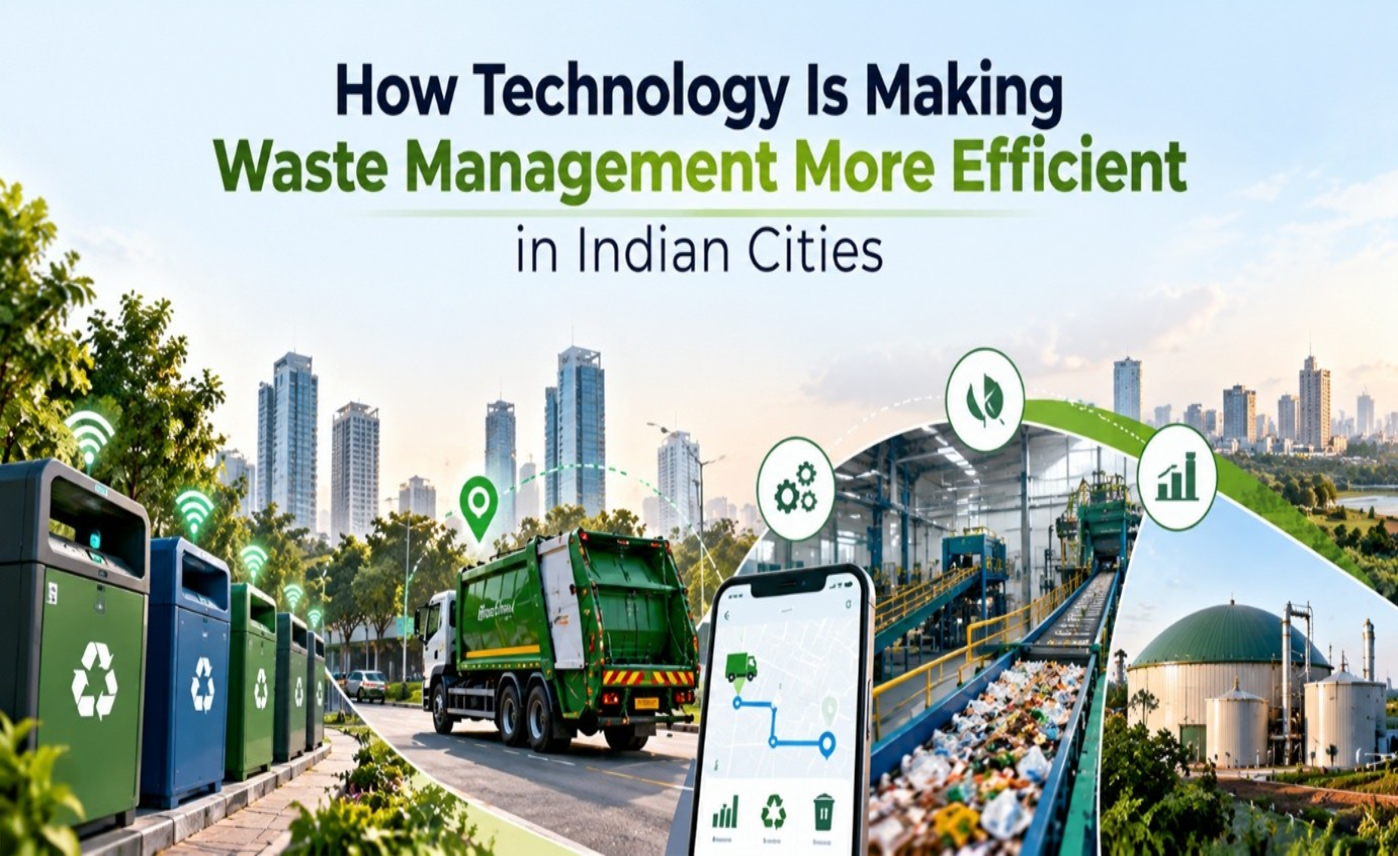
How Technology Is Making Waste Management More Efficient in Indian Cities
Indian cities are adopting digital monitoring, sensors, and automated waste...

India's Cold Chain Logistics: The Backbone of Perishable Trade
India's cold chain network allows the transfer of perishables from farm...
Partners