Introduction
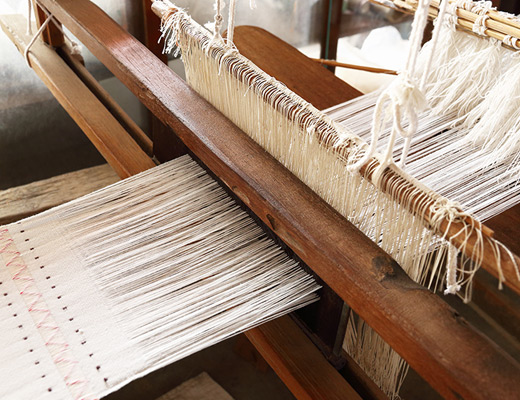
The handloom sector in India is a culturally rich and traditional industry that reflects the country’s heritage through generations of skilled craftsmanship. It is highly labor-intensive and eco-friendly, relying on minimal mechanisation and sustainable practices. Predominantly based in rural areas, the sector provides significant employment opportunities, especially to women, thereby playing a crucial role in supporting rural livelihoods and promoting inclusive economic development.
The handloom sector of India is one of the biggest unorganized sectors. The handloom industry in India has a long tradition of outstanding artisanship that represents and preserves vibrant Indian culture. India's handloom artists are globally known for their unique hand-spinning, weaving, and printing style.
Category-wise share of handlooms export revenue (FY25)

Source: The Handloom Export Promotion Council (HEPC)
They are based out of small towns and villages of the country which transfer skills from one generation to the next. According to the Fourth All India Handloom Census 2019-20, India had 28.20 lakh handlooms and 31.45 lakh handloom households, with 35.22 lakh handloom weavers and allied workers, including 26.74 lakh weavers and 8.48 lakh allied workers. Women accounted for more than 72% of the handloom workforce. India produces several traditional products such as sarees, kurtas, shawls, ghagra cholis, lungies, fashion accessories, bedspreads, etc. In the contemporary product category, the country produces fashion fabrics, western dresses, bed linens, drapes, kitchen linen, decorative furnishings, rug durries, etc. The handloom sector of India has the advantage of being less capital intensive, eco-friendly, having less power consumption and having the ability to adapt to market conditions.
Export Trend
India's handloom export trend (US$ million)

Source: The Handloom Export Promotion Council (HEPC)
India’s handloom product exports have shown a mixed trend over the past seven years, reflecting shifts in global demand, discretionary spending patterns and evolving destination dynamics. Exports to the United States, traditionally the largest market, declined from US$ 100.47 million in FY20 to US$ 40.02 million in FY26, indicating moderation in demand from a key mature market. Likewise, exports to the United Kingdom and France softened over the same period, with FY26 exports standing at US$ 5.90 million and US$ 7.27 million, respectively.
In contrast, exports to the United Arab Emirates have strengthened steadily, increasing from US$ 11.16 million in FY20 to US$ 44.80 million in FY26, highlighting growing demand from West Asia.
During FY26 (April 2025–March 2026), India’s total handloom exports stood at US$ 153.8 million, with demand continuing to be supported by global preference for sustainable, handcrafted and heritage textile products. The major handloom export centers are Karur, Panipat, Varanasi & Kannur where handloom products like Bed linen, Table linen, Kitchen linen, Toilet linen, Floor coverings, embroidered textile materials, curtains etc. are produced for export markets. In FY25, India exported cotton yarn/ fabrics /made-ups, handloom products etc. worth US$ 10.56 billion.
Export Destinations
During FY27 (April–July 2026), the United States emerged as the largest destination for India’s handloom product exports, with shipments valued at US$ 21.57 million, accounting for 48.33% of total exports. France followed with US$ 2.71 million, contributing 6.06%, while the United Arab Emirates accounted for US$ 2.39 million, with a share of 5.35%. Spain and the United Kingdom recorded exports of US$ 1.88 million and US$ 1.85 million, respectively, accounting for 4.21% and 4.14% of total exports. Together, these five markets accounted for 68.09% of India’s handloom product exports during the period, underlining their importance to the sector’s international market presence. Other notable destinations included Germany (US$ 1.26 million), the Netherlands (US$ 1.26 million), Italy (US$ 0.99 million), South Africa (US$ 0.89 million) and Greece (US$ 0.72 million). The continued presence of Indian handloom products across the US, European, West Asian and other international markets reflect the sector’s broad geographical reach.
Country-wise exports share (FY27 April to July 2026)

Source: The Handloom Export Promotion Council (HEPC)
Government Initiatives
India’s handloom sector is witnessing positive growth, supported by rising exports and sustained government initiatives. The Government has set a target of achieving US$ 10 billion in handloom exports by 2031, while promoting Indian handlooms globally and encouraging indigenous production. In FY26, India’s handloom product exports increased to Rs. 1,359.14 crore (US$ 153.8 million), from Rs. 1,175.2 crore (US$ 135.91 million) in FY25, registering growth of around 13.2% in rupee terms. The sector is supported by initiatives covering skill development, design and product development, marketing assistance, cluster development and technology upgradation. The Government is also focusing on country-market diversification and targeted outreach through Export Promotion Councils, industry delegations and Indian Missions abroad to strengthen India's global market presence. Recent initiatives, including the GI & Beyond 2.0 Summit and the launch of the Digital Handloom Atlas, are aimed at improving visibility and market access for India's GI-tagged handloom products.
The Handloom Export Promotion Council (HEPC), under the Ministry of Textiles, supports exporters through government-backed export promotion and market-development initiatives. While the Market Access Initiative (MAI) supported activities such as international marketing, participation in trade fairs, capacity building and export facilitation, the scheme's revised guidelines were applicable up to March 2026. Export support has subsequently been strengthened through the Export Promotion Mission (EPM), which includes Niryat Protsahan and Niryat Disha and provides assistance related to trade finance, export compliance, logistics and overseas market access. The Government is also implementing the National Handloom Development Programme (NHDP) to provide end-to-end support for the handloom sector, including cluster development, infrastructure, marketing, skill development and technology-related interventions.
National Handloom Development Programme (NHDP)
The National Handloom Development Programme (NHDP) provides need-based financial assistance for the integrated development of the handloom sector and welfare of handloom weavers. Its key components include the Cluster Development Programme (CDP), Handloom Marketing Assistance (HMA), concessional credit under the Weaver MUDRA Scheme, infrastructure development, skill development, design and product development, and technology upgradation. From FY16 to FY26, financial assistance was provided to 797 handloom clusters, including 69 clusters in FY22, 110 in FY23, 96 in FY24 and 79 in FY25. Under HMA, around 16.12 lakh weavers were supported during the last five years through exhibitions, handloom expos, Dilli Haat and other marketing platforms. The Government has also developed the India Handmade e-commerce platform to facilitate online marketing of handloom products. NHDP continues to support the sector in FY27 with a budget allocation of Rs. 206.2 crore (US$ 21.72 million).
With the Mega Handloom Cluster Development Programme, need-based financial assistance of up to Rs. 30.2 crore (US$ 3.18 million) in Government of India share is provided per Mega Handloom Cluster for interventions including upgraded looms and accessories, solar lighting units, worksheds, design and product development, marketing support and common infrastructure such as value-addition, garmenting, reeling, processing and printing facilities. As of 2026, six Mega Handloom Clusters have been completed and are functional across six states, while five additional clusters are under implementation. The Government also supports Urban Haats to provide direct marketing platforms for handloom products; 28 Urban Haats are currently operational across the country.
Market Access Initiative (MAI)
The Market Access Initiative (MAI), introduced in 2018 and revised in 2021, was implemented to promote India's exports through targeted market-development and export-promotion activities. The revised MAI Scheme 2021 was applicable from April 1, 2021, to March 31, 2026. It provided financial assistance for activities including international marketing, participation in trade fairs and exhibitions, market research, capacity building, compliance-related activities, buyer-seller meets and other market-access initiatives. As the MAI's approved implementation period ended in March 2026, export-promotion support is now being strengthened through the Government's Export Promotion Mission (EPM), which provides a broader framework for improving access to trade finance, overseas markets, export-related compliance and market diversification.
Raw Material Supply Scheme (RMSS)
The Raw Material Supply Scheme (RMSS) is being implemented across the country to ensure the quality yarn to handloom weavers at reasonable prices. The scheme provides reimbursement of freight charges for transportation of all types of yarn and a 15% price subsidy on specified yarns, including cotton hank yarn, domestic silk, wool, linen and blended yarns made from natural fibres, subject to prescribed quantity limits. The subsidy is provided through Direct Benefit Transfer (DBT) to eligible beneficiaries. The scheme also aims to improve the availability and affordability of yarn, support weavers in accessing quality raw materials and enhance the competitiveness of the handloom sector. RMSS continues to be implemented in FY27, with a budgetary allocation of Rs. 201.2 crore (US$ 21.19 million) for FY27.
Governing Body
The Handloom Export Promotion Council (HEPC)
The Handloom Export Promotion Council (HEPC) is a nodal organization under the Ministry of Textiles, Government of India, established to promote exports of Indian handloom products such as fabrics, home furnishings, carpets, and floor coverings. It provides support and guidance to exporters and international buyers by facilitating trade promotion, market development, and global marketing initiatives. The Council plays a key role in boosting the handloom sector through activities like organizing international trade fairs, buyer-seller meets, and disseminating market intelligence, while also advising the government on policy matters and promoting innovation, quality improvement, and product diversification in the industry.
FAQs
The Handloom Export Promotion Council (HEPC) supports handloom exports through international trade fairs, buyer-seller meets, market intelligence and global marketing initiatives. It also provides guidance to exporters and buyers while promoting product diversification, quality improvement and innovation to strengthen India’s presence in the global handloom export market.
Indian handloom products exported to global markets include fabrics, home furnishings, carpets and floor coverings. Major export centres such as Karur, Panipat, Varanasi and Kannur produce bed linen, table linen, kitchen linen, toilet linen, floor coverings, embroidered textiles and curtains for international markets.
GI-tagged Indian handloom products are receiving greater market visibility through government-led initiatives such as the GI & Beyond 2.0 Summit and the Digital Handloom Atlas. These measures aim to improve visibility and market access for distinctive Indian handloom products, supporting their positioning in international markets.
The document identifies major handloom export centres rather than providing state-wise export values. Karur, Panipat, Varanasi and Kannur are highlighted as important production and export centres, producing a range of home textiles, floor coverings and other handloom products for international markets.
India’s handloom sector benefits from its eco-friendly and sustainable production characteristics, including minimal mechanisation and lower power consumption. During FY26, total handloom exports reached US$ 153.8 million, with demand supported by global preference for sustainable, handcrafted and heritage textile products.
Government support includes the National Handloom Development Programme, Export Promotion Mission, Raw Material Supply Scheme and cluster-development initiatives. These measures cover market access, export finance, infrastructure, skills, technology, design and product development, while FY27 allocations support continued development of the handloom sector.
Traditional clusters provide production, infrastructure, design, technology and marketing support to handloom weavers. Under the Mega Handloom Cluster Development Programme, assistance covers upgraded looms, worksheds, design development, processing, printing, value addition and common infrastructure, helping strengthen production and market readiness.
International trade fairs provide Indian handloom exporters with opportunities to showcase products, connect with overseas buyers and develop new markets. HEPC uses trade fairs and buyer-seller meets as key export-promotion channels, complemented by market intelligence and global marketing initiatives to strengthen India’s international presence.
India has set a target of achieving US$ 10 billion in handloom exports by 2031, supported by market diversification, export promotion, cluster development and greater visibility for Indian handloom products. In FY27 (April–July 2026), the USA accounted for 48.33% of handloom exports, while European and West Asian markets provided further opportunities.
RELATED SITES

No. 29A, Rajasekaran Street
Mylapore,
Chennai - 600034,
Tamil Nadu,
India
Tel.:+91-44-28476124
Fax: +91-44-28476126
Email: hepc@hepcindia.com
Website: www.hepcindia.com
Partners