|
According to a study by the McKinsey Global Institute (MGI), Indian incomes are likely to grow three-fold over the next two decades and India will become the world's fifth-largest consumer market by 2025.
Further, India is likely to see rapid urbanisation, with around 45 per cent of Indians living in urban areas by 2050, up from 30 per cent in 2007-08, according to a study by National Council of Applied Economic Research (NCAER) and Future Capital Research.
Consumers in India continued to be optimistic slightly more than what they were six months ago, according to the latest MasterCard Worldwide Index of Consumer Confidence survey. In India consumers are more optimistic than six months ago (68.0) and a year ago (63.9), according to the study. Both Mumbai (79.1 vs. 61.7) and Chennai (95.2 vs. 61.3) consumers have become more optimistic than they were six months ago.
Retail
According to a report by McKinsey, India's overall retail sector is likely to grow to US$ 419.93 billion by 2015.
According to global real estate consultant, CB Richard Ellis, India has moved up to the 39th most preferred retail destination in the world in 2009, up from 44 last year.
The Indian retail market, which is the fifth largest retail destination globally, has been ranked as the most attractive emerging market for investment in the retail sector by AT Kearney's eighth annual Global Retail Development Index (GRDI), in 2009.
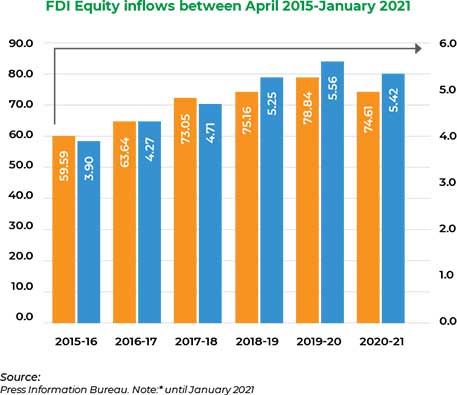
Foreign direct investment (FDI) inflows as on September 2009, in single-brand retail trading, stood at approximately US$ 47.43 million, according to the Department of Industrial Policy and Promotion (DIPP).
Consumer Durables
The Indian consumer durables market seems to be relatively untouched by the economic slowdown. The consumer durable goods output witnessed a 2.5 per cent rise in durables output in the first quarter of 2009, according to a report by the Development Bank of Singapore (DBS). Consumer durables led the growth in manufacturing by expanding at a significant rate of 46 per cent in December 2009.
Meanwhile, top private steel makers including JSW, Essar and Ispat Industries Limited have witnessed up to 30 per cent growth in sales volume in January 2010 over the year ago period, boosted by robust demand from consumer durable sector.
Automobiles
Global car makers such as General Motors (GM), Ford Motor Company, Fiat Automobiles, and Toyota Motor Sales are making huge sums of investment and partnering companies in India, the world's second fastest growing automobile market, as consumers in their home markets tighten purchases after the credit crisis.
Global luxury carmakers launched new models, with companies like Mercedes India, which exhibited as many as twelve different car models at the 10th Auto Expo held at New Delhi in January 2010. BMW India, which is now the country's largest selling luxury passenger carmaker, launched three new car models at the expo.
The luxury car maker, Aston Martin Lagonda Ltd, is firming plans to enter India. Luxury bike makers are also attracted to enter India. Harley-Davidson plans to launch its range of motorcycles in April 2010, and Ducati is expanding its presence across the country.
Ernst & Young has forecast the passenger car market in India to grow by 12 per cent annually over the next five years from the present figure of 1.89 million units to reach 3.75 million units by 2014. The industry's turnover is estimated to touch US$ 155 billion by 2016, which would rank the Indian automobile industry as the world's seventh largest as per analysts at Ernst & Young.
The Automotive Mission Plan of the government also forecasts that by 2016, India is to emerge as the seventh largest carmaker in the world, accounting for over 10 per cent of the country's economy.
|